
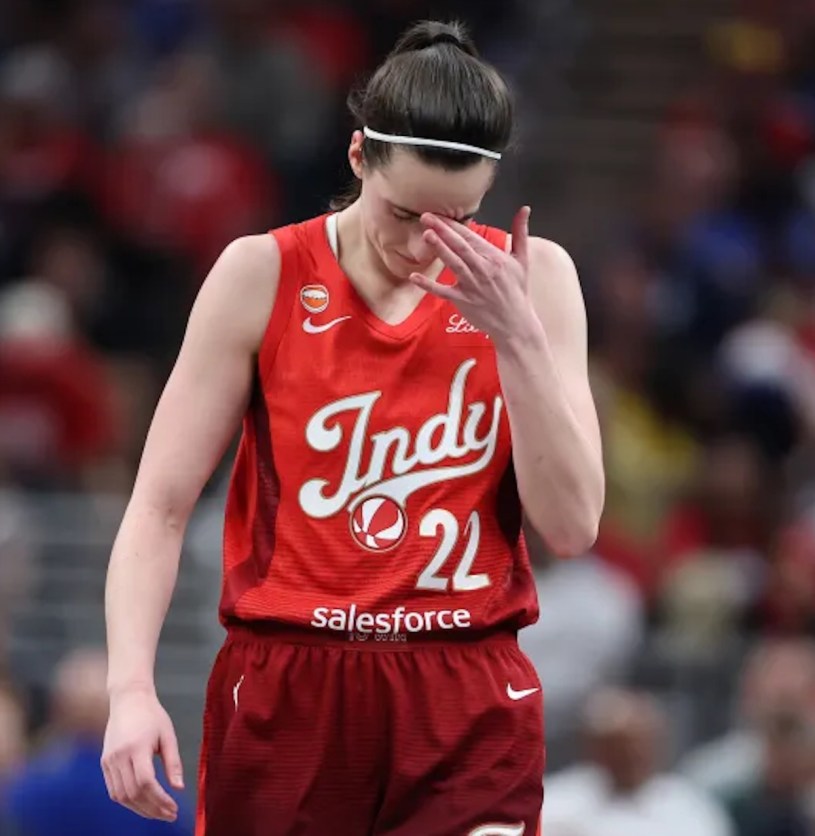
It’s been over four months since we did an entry in the Sunday Surmising miniseries, so it’s time now that the annual mediot hyperbole festival is over for the WNBA awards season. We will do our usual analysis of that when the Finals are over, but for now, we want to laugh and point fingers at some terrible shenanigans: anyone who voted for the third-best player on the sixth-best team in the league should have their ballots revoked for the future. It’s almost as if the WNBA media doesn’t even know the sport.
Indiana Fever guard Caitlin Clark received one first-place vote, and a total of 212 points in the balloting, despite finishing third on her team in total sabermetric Win Shares; third on the Fever in Win Shares per 40 Minutes Played; and third on the Indiana roster for Player Efficiency Rating (PER). Since March 2020 when we started doing our NBA awards analyses, PER and WS have been the primary benchmarks for choosing NBA MVP winners, since those are the accepted advanced analytics used in the sport.
So, why did WNBA mediots with MVP ballots decide to ignore the cutting-edge data analysis used by professional basketball front offices everywhere when voting for Clark? Good question, with an obvious answer. But that is an insult to both educated and informed fans of the sport, let alone the players in the league themselves. To make matters worse, Clark was ninth on her own team in Offensive Rating and eighth on the Indiana roster in Defensive Rating; all things told, she’s not even close to a team MVP.
All this data is readily available to anyone on the Internet, so it’s not like the mediot voters don’t know this (although perhaps it is possible some of them do not, of course, based on the low threshold of standards applied today in sports journalism). We covered the WNBA for a CBS regional affiliate in 2018, and we know it, of course. Yet the continued dishonest reporting by the greater WNBA mediots in order to profiteer off the mythos of Clark is reaching a breaking point, and more and more people realize it now.
The sad-albeit-amusing part of this is that the day Clark’s Nike shoes dropped on the market for suckers to buy, she did her all-too-familiar choke job on the court as the Fever were eliminated in the first round of the playoffs: 6-for-18 shooting (including just 3-for-12 from downtown) and six turnovers. Bad shooting percentages and poor ball-handling decisions are why her ORtg is so low on her own team, and why her PER lags behind better teammates, and why her WS/40 mark also trails her more-talented friends.
Alas, Clark once again topped the WNBA this regular season in turnovers by a huge margin: she coughed the ball up 36 more times than any other player. However, the mediots just parrot the counting stats that defined twentieth-century sports pages: “Clark was third in the league in scoring at 22.3 points per game!” Never mind that her sabermetric Effective Field Goal Percentage—a combination of all shooting percentages—was just seventh on her own roster this year, yet another reason for the garbage ORtg.
And her Usage Rate was second in the league, trailing only the real MVP vote winner. Do people wonder why the Fever finished sixth in the league despite all the hyperbole about how many points per game they scored this season (some kind of per-game record)? Or maybe they don’t. Do uninformed fans just assume that if you score the most points, you must be the “best”? That kind of elementary-school thinking just should not mean anything to alleged “experts” given WNBA MVP ballots in this day and age.
Our commentary on this sad state of affairs for the WNBA this season ends here, with the usual charge to fans and mediots interested in this sport: please learn some modern-day, sabermetric, statistical analysis before you do any disinformation in 2027.

