
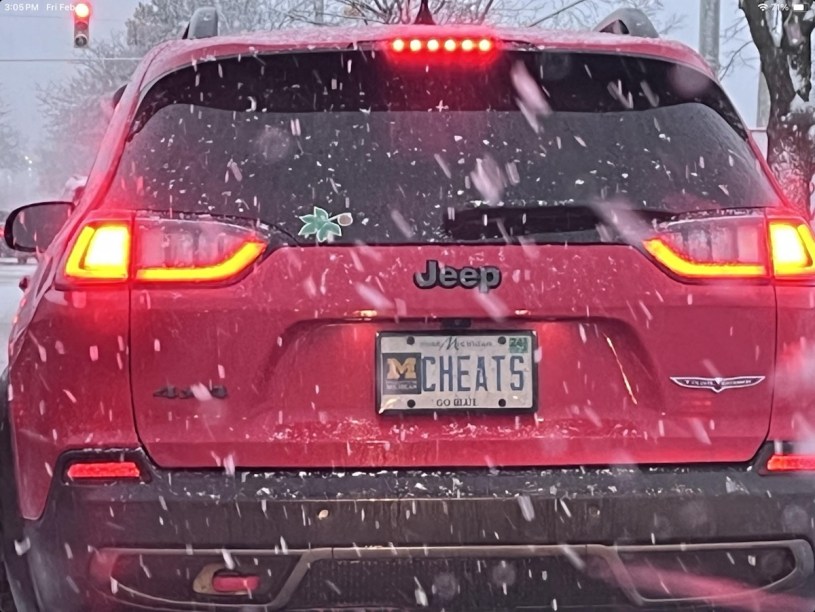
We really have figured out a very identifiable pattern for cheating in sports. It’s not difficult to figure out, and we will list some examples below to illustrate the scenarios. But instead of believing in “miracles”? Most sports fans—and the mediots that cover athletics—really should tune in to this 3-point checklist to discern whether a team (or an individual/individuals on the same team) is breaking rules covertly to win.
1. Time Lapsed Since Last Championship (if ever)
This is a good one to clue in on, since the longer a team goes without winning a championship, it feeds right into the second checkpoint on the list (see below). For example, teams we know that have been confirmed outright as cheating in major sports include the 2001 New England Patriots, the 2004 Boston Red Sox, and the 2017 Houston Astros. We will use these 3 examples for our primary analysis, but there are others, obvi.
The Patriots had never won a league championship, despite existing since 1960. They lost the 1963 AFL Championship Game and two Super Bowls (1985, 1996). When a team gets to a 40-year drought without a title, that affects bottom-line revenues, really, because there’s only so much “good ol’ days” merchandise you can sell to the fan base. Modern-day society demands winners on a regular basis, and the Patriots never won.
The Red Sox famously had gone since 1918 without winning a World Series, losing in Game 7s multiple times since then (1946, 1967, 1975, 1986). The so-called Curse of the Bambino was in full effect for a whopping 86 years! Meanwhile, the team’s main rival—the New York Yankees—were thriving in the late 1990s, winning 4 World Series from 1996-2000. This had to be burning the souls in the Red Sox franchise.
The Astros were like the Patriots: formed in 1962, they had played in 1 World Series in their first 55 seasons, losing via sweep in 2005. There was no success to be found, really: in those 55 seasons, Houston had reached the postseason just 10 times. That’s not a very good success rate, even for MLB now when so many teams started making the playoffs in expanded formats introduced in 1969, 1995, and 2012. That had to sting.
It’s easy to see how this works: either the team has gone forever without a title, or it has never won a title. Apply this measuring stick to all the teams we suspect of cheating this century, and it’s a pretty consistent condition. Despite spending tons of money, the team can’t win it all, and the only way they end up being able to do so? Is by cheating in one form or another. It’s not a coincidence, even if it can seem like one.
2. Money To Be Made from a Desperate/Large Fan Base in a Huge TV Market
The size of the fan base and the size of the TV market usually go hand in hand, clearly, due to simple population correlation: basically, there are a lot of fans rooting for these title-free teams, and they want to see their teams win at any cost—not only to their own pockets but in terms of crossing ethical and moral boundary lines as well. We’ve seen the excuses repeatedly from teams suspected of cheating and their fans.
Our favorites? “Everyone’s doing it!”, and “Haters gonna hate!”, plus other inane, childish retorts not used since the 4th-grade playground battles of elementary school. The desperation to be a winner is that strong in sports tribalism, where teams’ fans are okay turning a blind eye to blatantly obvious cheating in order to cash in, buy some championship gear, and scream, “We’re No. 1, baby!” at the top of their lungs. Feels good!
The fans then drop untold amounts of cash to buy new merch, while the teams can roll out as much new ridiculous stuff as they can. The fans will buy it. Suddenly, too, the TV ad revenue skyrockets on local broadcasts with advertising, etc., so there are many financial incentives for an organization to skirt the rules in order to cheat and win. And Americans, who used to despise cheating, have now embraced it.
Of course, the fan bases and TV markets for the Patriots and the Red Sox are the same: Boston and all of New England, really, plus everyone in the Northeast in general that hates New York City. Houston also is a large metropolitan area in a large state, so if some Texan hates Dallas for some reason, they flock to the Houston sports teams instead. Top 10 markets are the most complicit, we’ve found: Houston #7, Boston #9.
3. Sudden Shift in Fortune Defying Logic, Usually Labeled as “Miraculous!”
The mediots and the TV markets love to frame “unlikely” championships this way, because it affirms that “Everyone was against us!” mentality of the fans. Start with the 2001 Patriots: the season before, the team was 5-11 and missed the playoffs. In fact, every season from 1996 to 2000, the team’s win total decline: 11, 10, 9, 8, and 5. Overall, New England only had 4 playoff appearances in the prior 15 seasons before winning.
We know the sordid history of the Red Sox, although the team had been getting more competitive in recent seasons, for sure: 2004 didn’t come out of nowhere, although it certainly earned the “miraculous” label for the unprecedented playoff comeback against the New York Yankees in the American League Championship Series. We documented this ramp-up process in our Fenway Frauds miniseries, so feel free to check that out.
As for the Trashstros, well … after losing the 2005 World Series, the team didn’t make the playoffs again for 10 years, posting 6 straight losing seasons from 2009-2014 and tanking hard in a way that no one in MLB really cared for much. Then, after making the postseason in 2015, the team immediately regressed and finished in third place. Finally, in 2017, the Astros won 100-plus games for the first time in 20 years.
The 2001 Patriots were the longest shot here, by far, while maybe some experts thought the Astros could recover from a down year and win a weak American League West Division, for sure. And perhaps a lot of people picked the Red Sox to break the curse after they lost Game 7 of the 2003 ALCS to the Yankees on the road in extra innings. But each team overcome significant challenges and roadblocks to suddenly “win” it all.
Conclusion: This Is the Primary Formula and the Recipe for Identifying Cheating Teams
Combine these 3 conditions, and then it’s easy to hunt down more corroborating evidence, in the form of multiple players who suddenly turn it around, or managers who have a history with sketchy players and fishy results already. It’s not rocket science: all it takes is a little research. As any good criminal attorney will tell you, one piece of circumstantial evidence is an anomaly; two are a coincidence; and three are a pattern.
We have used the 2001 Patriots, the 2004 Red Sox, and the 2017 Astros as our prime examples, but the list of teams we suspect have cheated is significantly longer—including subsequent editions of the Patriots, Red Sox, and Astros that also won championships after cheating to win the first one. Do tigers change their stripes? No. If a team is not severely punished, it will not change decisions and patterns. Basic psychology.
Addendum: a List of Championship Teams Suspected of Cheating Since the Turn of the Century
The U.S. Department of Education put out a study a long time ago that determined 67 percent of college graduates could read a paragraph of complex information and tell someone else what it said—but they couldn’t explain to someone what it meant. That inability to move above the first level of Bloom’s Taxonomy is really shocking for adult America, but it applies to most sports fans, too: What does all this fucking mean?
Do your own research here and see if the pattern fits for these squads listed below. First, see if the teams qualify for the 3 checkpoints we extrapolated above; then, look more closely at individual performances for inexplicable improvements that defy common sense, historical data projections, and typical age-related decline. Also check for mitigating factors, like “new coaching techniques”, etc., or “new training regimens.”
These are all mediot codes for “they’re probably cheating, but we don’t have any proof (yet) so we are going with the same old boring clichés that we know the fan base will eat up.” Seriously. Again, the more the circumstantial evidence piles up, the more likely you can state with analytical and logical probability that a team is cheating. We know it happens; we know not everyone gets caught; and we know why (money). Alway$.
- 2001 New England Patriots
- 2003 New England Patriots
- 2004 Boston Red Sox
- 2004 New England Patriots
- 2007 Boston Red Sox
- 2010 San Francisco Giants
- 2010 Auburn Tigers
- 2012 San Francisco Giants
- 2013 Boston Red Sox
- 2014 San Francisco Giants
- 2014 New England Patriots
- 2016 New England Patriots
- 2017 Houston Astros
- 2018 Boston Red Sox
- 2018 New England Patriots
- 2020 Tampa Bay Buccaneers
- 2022 Houston Astros
- 2023 Texas Rangers
- 2023 Michigan Wolverines

