
It’s time to just outline the facts here: ever since the Auburn Tigers rightfully were excluded from the 2004 BCS Championship Game, the SEC literally has “won” every debate about access to the faux-title process—starting with the 2006 BCS Championship Game. And to pre-emptively dismiss logical fallacies here, whatever the outcome was post de facto does not change the reality of the flawed decision making before.
Tangentially, it’s interesting to note how the BCS chose to squeeze out the Pac-10 Conference even before the aggressive and hostile takeover by the SEC after 2004: it did so in 2000, in favor of the ACC, and again in 2001 in favor of the Big XII. And then there was 2003, again in favor of the Big XII. All those decisions were designed to generate more TV viewers and ad revenue, so at least the BCS and CFP have been consistent.
We’ve gone over this many times on MNC Wednesday columns, so here is a year-by-year look at the reality:
- 2006: This is when the SEC argued that the No. 1 and No. 2 teams should not get to play in the BCS title game, because they’d just played each other to end the regular season. Amusingly, the SEC would argue for a rematch in 2011 (see below), and it somehow won that hypocritical argument (probably by greasing the committee … how else?). The SEC team the committee picked ended up third in the final sabermetric rankings—behind two teams that should have been picked over the Florida Gators even if the committee didn’t want a rematch of Ohio State and Michigan. So, the BCS cabal fell for two ruses: the first being the rematch dilemma and the second being the selection of the team to face No. 1 Ohio State … which should have been either the USC Trojans (Pac-10) or the Louisville Cardinals (Big East). Those two teams ended up as the top teams in the sabermetric rankings. Again, the fact Florida beat Ohio State doesn’t mean anything for a counter argument here, as the end does not justify the means.
- 2007: This was one of the set-up years for LSU, with the BCS Championship Game being held in New Orleans. The Tigers had no business being anywhere near the title game, as they were a defensively weak team with two losses. If the BCS was going to break precedent and select a two-loss team for the title game, it certainly chose the wrong one when USC and West Virginia were sitting there with much better sabermetric profiles among two-loss squads. In fact, the Mountaineers finished with the best sabermetric rating in the nation, and the Trojans had a higher rating than LSU prior to the bowl games. The committee, therefore, also did not choose by record, or else Hawaii and Kansas would have been before LSU in the pecking order, and it did not choose by math, either, which would have put USC and West Virginia above LSU as well. This decision was entirely about money and nothing else: fraud.
- 2008: This was a snafu of a season in the Big XII, which ended with a three-way tie among one-loss teams, and the highest-rated sabermetric team was not given the tiebreak. In addition the BCS ignored the undefeated Boise State Broncos and the Utah Utes, who then rolled an SEC team in the Sugar Bowl. But again, the committee crapped out twice here, in errors that benefitted the Florida Gators: first, it ignored Boise State and Utah, despite both teams’ track record in beating the big boys, and second, it chose the wrong two one-loss teams to face off in the title game, based on sabermetrics. There were five one-loss teams from major conferences here, in addition to undefeated Utah: SEC champ Florida, Pac-10 champ USC, Big XII champ Oklahoma, Big XII division co-champ Texas, and Big XII division co-champ Texas Tech. The Sooners were chosen via the suspect “BCS formula” to get the edge over the Longhorns and the Red Raiders, when really sabermetrics show that Texas was the best of the three. But why Florida over USC? The Trojans again had a better sabermetric profile before the bowls. So, instead of a Texas-USC “rematch” from 2005, the committee chose a Florida-Oklahoma snoozefest—once against fucking over the Pac-10 and boosting the SEC in the process. The Gators were literally No. 5 in the pecking order here, behind Utah, Boise State, Texas, and USC if the BCS committee had been “consistent” in its decision making. Yeah, right … what a joke, huh?
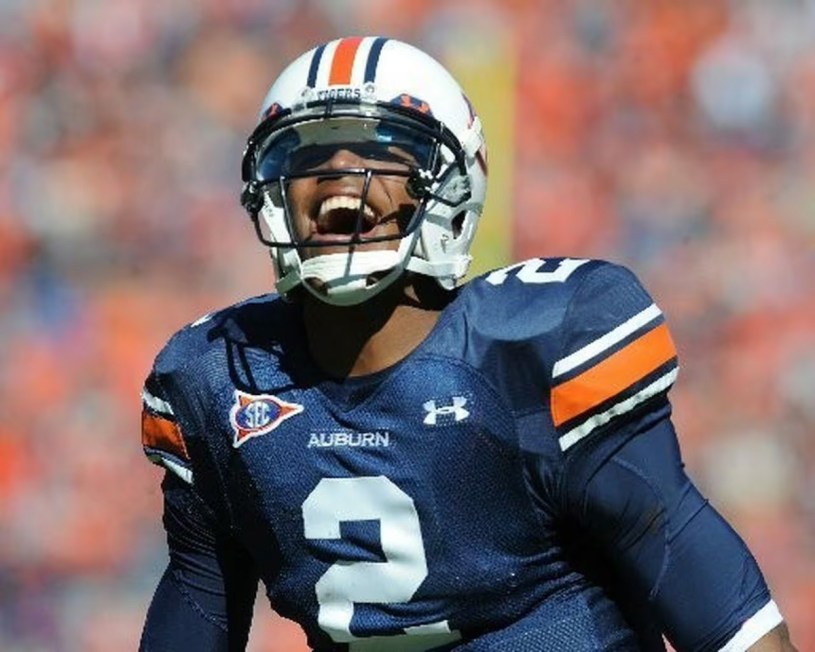
- 2010: This remains a seriously complicated problem to this day, as the Auburn Tigers should have been ruled ineligible before they played in the Iron Bowl this season. The issue here was the NCAA’s complicit involvement in not suspending Auburn quarterback Cam Newton when it had done the opposite with another player in a lesser-yet-very-comparable situation at a different school … retroactively. So, did the BCS put the squeeze on the NCAA to “do right by it”? Auburn was undefeated at 11-0, and certainly the SEC did some lobbying to keep Newton eligible. But if the NCAA had been consistent, the Tigers would not have been able to participate in the BCS Championship Game. The BCS certainly didn’t care about consistency at this point, obviously. Oddly, the two best teams in the country were both from the Pac-10, including the Oregon Ducks—who lost to Newton and the Tigers on the final play of the BCS title game. The BCS committee also ignored undefeated Texas Christian University, but that was to be expected with undefeated Auburn and Oregon sitting there. But again, the issue here is that Auburn should have been eliminated if the NCAA actually enforced its own rules consistently as noted at the time by multiple publications and their expert analysts—or if the SEC itself had done the right thing, but the conference also seemed to fix the Iron Bowl that year. Alabama led 24-0 in the first half of the game before Auburn came back to win, 28-27. Some officiating certainly was involved with that comeback. So, the NCAA, the SEC, and the BCS all conspired, in essence, to perpetrate this fraud on the American public. For the record, this was the fourth time in five seasons the SEC contrived to manipulate the BCS into throwing it undeserved bones.
- 2011: This was the clincher, really, that the new fix was in. After arguing “No Rematches!” in 2006, the SEC now argued for a rematch between LSU and Alabama, and it got what it wanted from the BCS committee at the expense of the Oklahoma State Cowboys and the Big XII. So, while the Big XII used to be a beneficiary of the BCS inanity, now it became a victim for second time in four years (see 2008 above). The transition to SEC control of the BCS was complete, in essence, and it led to the worst TV ratings of the whole BCS era—which led us to the CFP inception. Ironic, huh? Either way, the Cowboys had the highest sabermetric rating going into the bowl season, but they were snubbed in favor of an Alabama team that didn’t even win its SEC division while Oklahoma State won the Big XII.
- 2012: More double standards and inconsistency from the BCS committee this year, as the SEC won another contrived title. Never mind that undefeated Ohio State was on probation for some students getting free tattoos—while the Newton situation was completely “legitimized” by the NCAA. Never mind that Alabama was undeservedly picked as the team to face undefeated Notre Dame in the championship, when the Oregon Ducks were ranked higher sabermetrically at that point. Oregon didn’t win its Pac-12 division, either, much like Alabama the year before … but forget consistency, right? The only consistency the BCS committee ever displayed was SEC hypocrisy almost every time out, moving the goalposts and revising rules on the fly to meet the SEC’s demands/needs.
- 2013: The final year of the BCS gave us one more fix job for the SEC as Auburn was laughably picked to face undefeated Florida State in the final incarnation of this fraudulent charade. Luckily, the Seminoles saved us all from another faux title going to a faux team from a faux conference. Heck, the Tigers finished the season No. 6 in the sabermetric rankings, and even Alabama was more deserving of that title shot, despite losing to Auburn via this miraculous moment. The right team won in the end, but again, there were several other teams much more worthy of a title-game bid than the Tigers—including Pac-12 champion Stanford and B1G champion Michigan State, who played in the Rose Bowl. Heck, even the Ducks again as a non-division winner should have been chosen over Auburn if the committee wanted to be “consistent” with its past favoritism of the SEC. But again, it just moved the goal posts to suit its benefactor.
More to come in the second part to this examination focusing on the CFP years (2014-2023).
 Daily McPlay: (mostly) Historical Sports Analysis with TENACITY & VERVE