
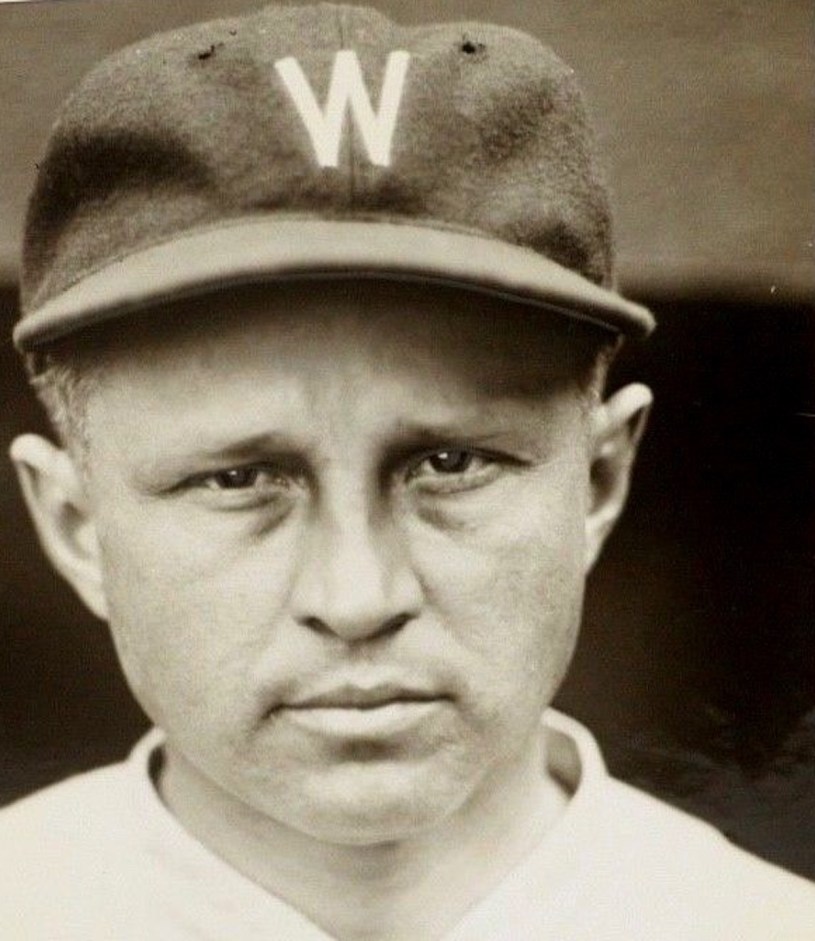
Last week’s MLB Monday column looked at the 1920 Chicago White Sox, and one of the players we included in the analysis was the mediocre outfielder Nemo Leibold. Over 13 years in the majors, he accrued just 10.8 WAR—yet he ended up with two World Series championships in a career that saw him post just a .683 OPS. By the available data, Leibold also was a mediocre fielder (minus-4.4 dWAR), so there is little to see here in terms of “talent” to impress us.
He broke into MLB as an age-21 rookie in 1913 with the Cleveland Indians, hitting .259 across 93 games with a mere 12 RBI. Leibold didn’t have any power (zero home runs), although he displayed some speed (16 steals). Somehow, his .649 OPS helped him earn 0.2 WAR for Cleveland, and he got even more playing time in his second season with the Indians: 113 games, 32 RBI, a .665 OPS, and 0.8 WAR. He was the team’s primary center fielder, in fact, next to a Hall of Famer.
That’s right: Joe Jackson played right field for the 1914 Cleveland club, topping the team with an .862 OPS. But with the 1915 Indians headed for a 57-win season, they parted ways with both players—trading Jackson to the ChiSox and outright releasing Leibold, who was then claimed by the Pale Hose. Jackson has posted an .858 OPS in 83 games before his trade, while Nemo, via 24 walks in 57 games, produced 1.3 WAR with Cleveland. He still lost his job to Billy Southworth, oddly.
With the White Sox, though, he was a spare part on an up-and-coming team, filling in at all three outfield positions through the 1916 season. However, at age 25, Leibold began his most productive career stretch: from 1917-1919, he was a primary starter (RF in 1917 and 1919, LF in 1918), playing in 363 games while posting a combined 5.6 WAR across those three seasons. Of course, Chicago won the 1917 World Series and then lost the 1919 Fall Classic, famously—not so bad.
But that was the end of being a productive contributor in Chicago, as his 1920 season was a disaster, and he was only in his age-28 campaign. The White Sox found a buyer for him, though, sending him with teammate Shano Collins to the Boston Red Sox, who were famously shedding salary, for outfielder Harry Hooper. A future Hall of Famer, Hooper was in the latter days of his career after winning four Series titles with Boston in the 1910s. It was kind of an odd trade, really.
However, Leibold rebounded to post a career-best .306 batting average playing half his games in Fenway Park, posting an impressive 1.6 WAR overall. His return to prominence was short, though, as he lost his starting CF gig with Boston during the 1922 season, dropping to just 81 games played and only 0.2 WAR produced. After a slow start to the 1923 campaign, Boston waived him, and the Washington Senators picked him up. This would be his final MLB destination.
It turned out to be fortuitous one, though, for Leibold: he posted a career-best .789 in 95 games with the Senators across the remainder of the 1923 season, drawing 53 walks to just 16 strikeouts. At age 31, his latest renaissance as a reserve outfielder for the talented Washington club paid off with a World Series title in 1924 and another AL pennant in 1925 during the final year of his career. For a guy with that career .683 OPS, he certainly had very good timing in the majors.
Two things we want to point out: his aggregate numbers don’t impress, but his 162-game pace tells a different story: he posted 1.4 WAR for every “full season” played, even though he averaged less than 100 games player per year in MLB. He only hit three HRs total, although he did draw 73 walks for every 162 games played. The reality, of course, is that he was one of the early platoon players of the era, hitting .271 versus righties in 1,040 games—and just .227 against lefties. Doh!
With just 247 games played against lefties, we can see why his numbers look odd, even from a distance a century later. It’s one of those statistical elements you have to dig a little deep to see, but the facts are there. Even so, a .692 OPS against righties really isn’t that impressive, even for the time period (103 OPS+). As a platoon player, Leibold still barely was above average, and we know his defense wasn’t great, either. It’s an interesting career profile, statistically speaking, all in all.
The final thing we want to point out is his worthlessness in October: even though he only played in 13 World Series games across four postseason, Leibold hit just .161 overall in the Fall Classic with a .504 OPS. Interestingly enough, he was not one of the Black Sox, despite hitting just .056 in the 1919 Series in 20 plate appearances spread out among five games. After his great 1919 regular season, that World Series slump carried over to his 1920 season and ended up damaging him.
Alas, as noted above, Leibold landed fine in the end, and he won two World Series championships with better teammates. We can’t all be superstars, and we can’t all carry our teammates. Sometimes, you’d rather be lucky than good, right? Bingo.
 Daily McPlay: (mostly) Historical Sports Analysis with TENACITY & VERVE
The Nemo Leibold profile is a great example of the kind of career that WAR really helps contextualize because on the surface two World Series rings sounds impressive until you look at the underlying numbers. The detail about Joe Jackson and Leibold both leaving Cleveland in the same reshuffling is such a wild historical footnote. It’s fascinating how a guy with a minus-4 defensive WAR still managed to stick around 13 years at the big league level. Really enjoy these deep dives into the overlooked players of early baseball history!
LikeLike