
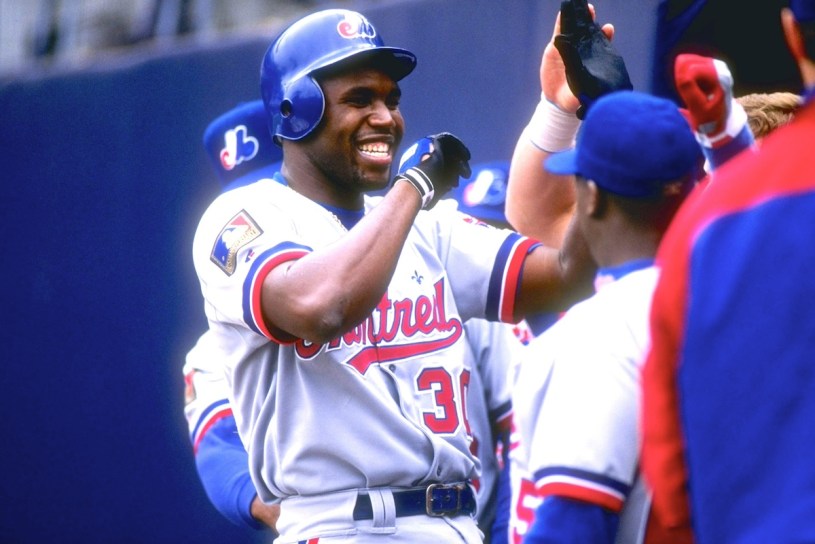
Sometimes, the best teams get lost in the moment for reasons beyond control: we think the perfect example of this is the 1994 Montréal Expos—sabermetrically, the best bunch in the history of the Washington Nationals franchise, which moved from Canada to the U.S. capitol in 2005. Of course, 1994 is well known to baseball fans as the year that the owners canceled the World Series out of greed and self-serving interests.
And it not only ruined baseball for the next three decades, it all but killed baseball in Montréal. So today’s MLB Monday piece examines the 1994 Expos and their potential place in history that never happened.
Born in 1969, the Expos had made one postseason appearance—in 1981—by the time 1994 rolled around, but the club had all the pieces in place finally to make a serious push for the playoffs (and maybe more?). Manager Felipe Alou was in his first dugout job: coming into the season, he had posted a 164-123 record already after taking over in the 1992 season. The 1993 club had won 93 games despite missing out on October.
Montréal was ready to take the next step, and it did: the team went 54-33 in the first half of the season, fueled by a 26-11 stretch from June 1 to the All-Star break. By the time the labor strife reached its breaking point, the team had a 74-40 record, six games ahead in the new National League East‚ which featured the last three NL pennant winners (Atlanta in 1991–1992, Philadelphia in 1993) and the stout New York Mets.
The record featured all the key aspects of a serious winner: a 42-20 road record; a 21-14 record in one-run games; and 24-12 record in blowout games. These Expos were built for everything, as the roster reflected. Here’s a quick look at the top valued players for the 1994 Montréal squad, with their actual WAR and projected WAR over a full season if they had been enabled to play in one by the baseball weauxf gods:
- Moisés Alou, LF (5.1; 7.7): At age 27, he was entering his prime, hitting .339 and posting a .989 OPS
- Marquis Grissom, CF (5.1; 7.5): Also age 27, he won a Gold Glove (2.2 dWAR) while stealing 36 bases
- Larry Walker, RF (4.7; 7.4): With an NL-best 44 doubles, he hit .322 as he, too, was in his age-27 year
We have to stop here to point out that this was the starting outfield: Alou and Grissom were on the All-Star team in 1994, and even though Walker was not, he ended up in the Hall of Fame. That’s got to be up there for the one the best OF trios ever in a single season. We have a hard time imagining just how a team could find itself with such a combination of talent, all the same age and all peaking at just the right time. Incredible.
- Pedro Martínez, SP (2.2; 3.2): Still known at age 22 as Ramón’s little bro, his talent was really evident
- John Wetteland, RP (1.4; 1.9): Sharing the closer role here, he was also in his age-27 year and primed
Remember, this was Pedro’s first year with the Expos, after the Los Angeles Dodgers foolishly traded him away for Delino DeShields, who was overrated as Montréal’s front office realized—and clearly the Expos didn’t miss a beat without DeShields. As for Wetteland, he found fame elsewhere (New York, Texas) for closing in a dominant fashion, although his legend as a Yankees would be eclipsed by his successor there.
Other recognizable names in the Montréal lineup? An age-22 Wil Cordero at shortstop, where he earned 3.1 WAR overall, although he never lived up to the promise of this one season. Perhaps he missed his teammates? Catcher Darrin Fletcher was a 1994 All Star (also age 27); rookie first baseman Cliff Floyd was in his age-21 season; backup outfielder Rondell White (age 22) would go on to have a pretty solid career.
The rotation “behind” Pedro featured age-31 veteran Jeff Fassero (2.4 WAR) and in-his-prime Ken Hill at age 28 (2.9)—two guys with name recognition beyond this squad. It was rounded out by surprising youngster Butch Henry (3.8) at age 25 and a mediocre Kirk Rueter (age 23), who regressed from his 1993 rookie-debut efforts. The latter actually hurt the team every time he took the mound, but never mind that.
The bullpen also included age-27 veterans Mel Rojas (1.0 WAR), Jeff Shaw, and Tim Scott (1.4). Rojas was the other co-closer with Wetteland, while Scott was an effective set-up guy. Incidentally, Shaw earned his second career save on this team, but he would go on to save 203 games overall in his career, mostly with the Cincinnati Reds and the Dodgers. As we noted, this roster was built very effectively in many different ways.
How many of these guys were in their age-27 seasons together? Eight by our count, including the four guys in the bullpen—which meant a minimum of blown leads. Between the entire outfield and the starting catcher, too, there was a lot of talent coming into its peak together at the right time. Throw in the NL Manager of the Year at the helm, and it’s clear these Expos had it all put together for a run at the Series.
Alas, it was not to happen, but we can project, perhaps: this would have been the first year of the wild card in the postseason, so Montréal would have faced the Braves in the first round of the postseason—a best-of-five matchup. That matchup might have favored Atlanta, due its rotation at the time, but the Expos were the better overall team, sabermetrically (tops in the NL, while the Braves were third. Let’s say Montréal in five.
The other NL Division Series between the Reds and the Dodgers was actually a lopsided matchup, with Cincinnati being almost as good as the Expos, sabermetrically, with Los Angeles being just a little bit above average. The Reds could have take that series in four games, readily, setting up an NL Championship Series of seven games between the NL East and the NL Central champions. This is where it gets tricky, for sure.
Cincinnati won four of the six games played between the two teams during the regular season, but removing Rueter from the rotation already levels that equation. The Reds also had a tough division race, “beating out” the Houston Astros by a half game for the NL Central crown, although we do know there no real pennant race in a season that was abruptly stopped in early August. That doesn’t mean much here.
What stands out to us is the Cincy road record (29-26); that’s mediocre for a 66-win team in this shortened season. Plus, the Reds went just 20-19 in one-run games. Thus, with the slim sabermetric edge, already, we can project the Expos might have won the NLCS in a six-game scrum, stealing one game on the road in a blown-save scenario by the Cincinnati bullpen at old Riverfront Stadium. Montréal was just that good.
The Expos in the World Series … what a sight that could have been, and maybe it would have saved baseball in Quebec. We will never know. We also don’t know if Montréal might have emerged victorious in that Fall Classic, as both the Yankees and the Chicago White Sox had very good teams that season, too, slightly better than the Expos sabermetrically, as well. One thing in Montréal’s favor was the pitching prowess, however.
Giving up only 4.0 runs per game, the Expos were superior there to the White Sox (4.4) and the Yankees (4.7). And Montréal had a great manager, too, with the best PPP mark of any manager in the playoffs. That would have counted for something in the heat of the moment; we’d like to think the Expos would have completed their dream season in Hollywood fashion, for sure. It is our speculative column, after all …

