
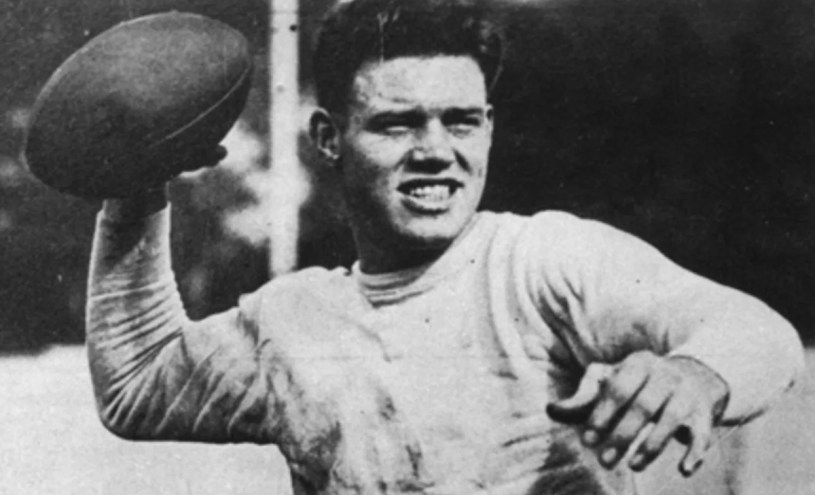
Someday we will go back and review some sabermetric data (whatever is available) for these “early” years of college football, for our semi-defunct MNC Wednesday miniseries, but in the meantime, it’s a matter of Rose Bowl Friday and our revisiting of the early games at the Granddaddy of Them All. Today, it’s a look back at the 1921 Rose Bowl when the California Golden Bears beat the Ohio State Buckeyes, 28-0. Boom!
This was the first matchup since the original to feature a clash between future B1G and Pac-8/10/12 opponents, and it also resulted in a whitewashing by the victors. Both teams were undefeated and untied coming into the game, and on paper, the Buckeyes looked like the stronger team—based on SOS ratings (6th for Ohio State, 81st for California). However, we’re guessing the train travel from Ohio had an effect.
How could it not? The Golden Bears were 8-0, but they had played just four major-college opponents on their way to outscoring those eight defeated teams by a 482-10 margin. That is not a typo. On the other side of the ledger, the Buckeyes were 7-0 with wins over five major-college opponents, all members of the Western Conference (the forefather of the traditional B1G). Cal only played three members of a future P12.
The SOS ratings should have been more meaningful, but the Golden Bears jumped out to an early lead and led 21-0 at halftime, thanks to two short touchdown runs by Pesky Sprott and a 37-yard TD pass in between. Cal added a score in the fourth quarter to establish the final margin. Ohio State would not be shutout again until the 1993 season, and the Bears would continue an unbeaten streak into the 1924 season.
Interestingly enough, it also would be 32 years before another future Pac-8/10/12 team beat a B1G team in the Rose Bowl. So, either the travel bug was conquered, or … the Midwest football dynasties just got more powerful. We’re going with the latter based on our MNC series, although we don’t underestimate the Midwest teams learning how to cope with the travel issue more effectively, either. Both factors were key.
 Daily McPlay: (mostly) Historical Sports Analysis with TENACITY & VERVE