
The MNC Wednesday prequel miniseries returns this fine day after St. Patrick’s Day to check in on the 1918 season, which included a Rose Bowl on January 1, 1919. This year is a strange one to review, as it took place during the culmination of World War I, which means most college campuses had sent a lot of young men to the battlefields of Europe. It also meant there were military-base teams, which we never feel should be eligible for a mythical national championship; the playing field was not level.
The 1918 MNC: Pittsburgh (Helms, NCF-tie), Michigan (NCF-tie); Illinois (DMP)
So, we have another split decision this season with the “experts” and their picks. Both Michigan and Pittsburgh won a share of the MNC as noted above. There is a pretty clear demarcation line after the top 11 teams in the SRS rankings, and the Wolverines (No. 2) and the Panthers (No. 3) both will get their fair due here … along with some other teams, as well. This is the way we do things, as readers know. And we must say, too, that the No. 1 SRS team—the Great Lakes Navy Bluejackets—isn’t under consideration.
- Michigan (5-0): No. 2 SRS, No. 3 SOS (out of 72)
- Pittsburgh (4-1): No. 3 SRS, No. 20 SOS
- Oklahoma (6-0): No. 4 SRS, No. 38 SOS
- Washington (MO) (6-0): No. 5 SRS, No. 47 SOS
- Navy (4-1): No. 6 SRS, No. 28 SOS
- Syracuse (5-1): No. 7 SRS, No. 17 SOS
- Texas (9-0): No. 8 SRS, No. 37 SOS
- Colorado Mines (4-0): No. 9 SRS, No. 69 SOS
- Georgia Tech (6-1): No. 10 SRS, No. 35 SOS
- Illinois (5-2): No. 11 SRS, No. 6 SRS
The Bluejackets finished No. 1 in the SRS, too, on their way to a 6-0-2 finish, which included ties against Northwestern and Notre Dame, as well as that Rose Bowl victory. But again, this was basically an unofficial group of “All Stars” thrown together out of necessity via military duty. Thus, we cannot consider them for the MNC, even though their accomplishment of the double sabermetric crowns is impressive. Obviously, the noted “experts” also didn’t consider them, we assume, for if they had … yeah.
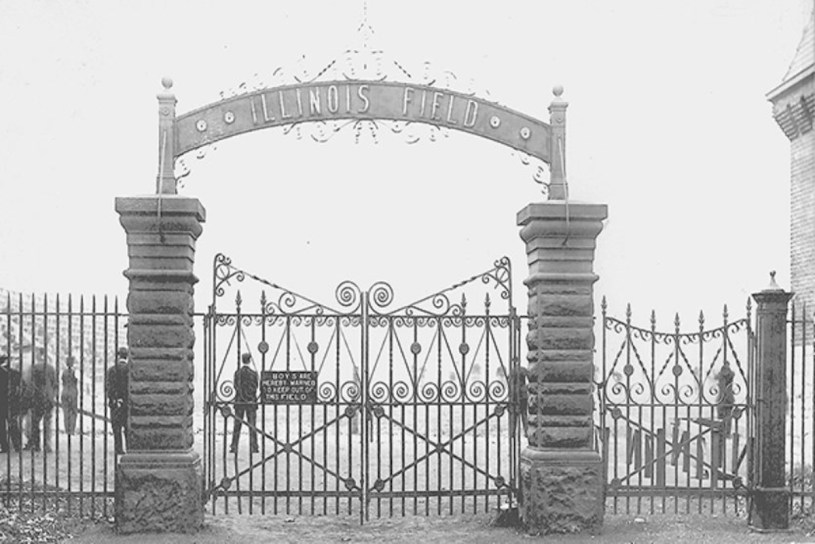
With that out of the way, let’s start at the bottom: the Illini went 4-0 against its Western Conference foes (but not Michigan), outscoring them 83-0, while losing to Great Lakes Navy and another military-base team. The losses do count, unfortunately, for Illinois, and it would have been fun to see them play the Wolverines. The two schools had two common opponents: Chicago and Ohio State. The Illini outscored them 42-0 while Michigan only outplayed them by a 27-0 margin. We have to come back to this.
The Yellowjackets scored in triple digits against three opponents, but they somehow lost to Pitt by a 32-0 margin. Dismissed. The Orediggers (such a great team nickname!) have an SOS that is laughable, and they only played four games, anyway, due to travel restrictions—one of them a small school in-state. Dismissed. While Texas went 5-0 against major-school competition, the four other wins were against weak(er) competition, as reflected in their SOS rating. The Longhorns would have fared better without.
But we’re going to come back to them. Next up: the then-Orangemen’s one loss was to Michigan, so they’re out. The Midshipmen lost to Great Lakes Navy by one point in their final game of the season, and the other four wins were against small(er) military-base teams. Overall, it’s just not enough of a real statistical profile to take seriously; apologies to the Navy here, but … dismissed. The Washington (MO) Bears played three small schools on their way to that record, and the SOS is obviously not there, as a result.
The same goes for the Sooners, who played two small schools and a lesser military base. This now leaves us with Michigan and Pitt, which lost to the Cleveland Naval Reserves team, a lesser military base. That’s a damning loss, which leaves the Panthers with a lesser SOS than Michigan and no pathway to overcome Michigan’s superior sabermetric profile. So, we’re not sure why Helms chose Pittsburgh here: it did beat four major opponents by a 131-6 margin, yet the Panthers lost their only road game. Dismissed.
So now we are left with Michigan’s near-perfect profile, Illinois’ competitive profile, and Texas’ mishmash schedule. We don’t like that the Wolverines played only four major-college teams, which is actually one less than the Longhorns played. In those games versus real opponents, Michigan outscored the vanquished, 63-6, while the Texas beat down its legit foes by a 99-5 margin. We understand travel restrictions limited most teams in scheduling, so it’s hard to count that dynamic against any team this year.
Texas played four Southwest Conference rivals and one independent (Texas Christian), while Michigan played only two Western Conference foes (two less than Illinois played) and two independents (Michigan State, Syracuse). This is tough, because the Illini played a better conference schedule than Michigan did and beat its four rivals by an 82-0 margin with three road victories. Meanwhile, the Wolverines only played two road games. See how messy this gets trying to pick apart the wartime schedules?
We’ve used our usual methods to get this situation reduced to three teams; now we think we should throw out the makeshift scheduling against non-major competition, so this is what we have now:
- Michigan (4-0): MOV, 63-6
- Texas (5-0): MOV, 99-5
- Illinois (4-1): MOV, 83-7
Again, the Illini’s one real loss came to SRS No. 1 Great Lakes Navy, which was an All-Star team, and they only lost, 7-0. Otherwise, Illinois tossed a season shutout against level competitors. The Wolverines have a weaker MOV and only played two conference foes, the least of the troika. We thought the Michigan profile would be hard to beat, but the contextual and situational realities matter here during wartime. The fact the Longhorns have the most wins against real competition is big, even with SOS.
But Texas played just one road game, while Illinois played three. In the end, this is splitting hairs, and we know it. But pressed to make a singular pick, we’re going with the Illini, just as we did for the 1919 season: the reasons are all above, but we will recap them. The road games, the MOV, and the legitimacy of SOS really matter in picking Illinois over both Michigan and Texas. This is the second MNC for Illinois, then, in conjunction with the MNC we awarded for the subsequent season. Impressive, generally.
[Editor’s Note: We’re fine with anyone arguing for the Longhorns or the Wolverines. We won’t quibble. However? The Panthers probably shouldn’t have earned a nod here from any experts.]
 Daily McPlay: (mostly) Historical Sports Analysis with TENACITY & VERVE