
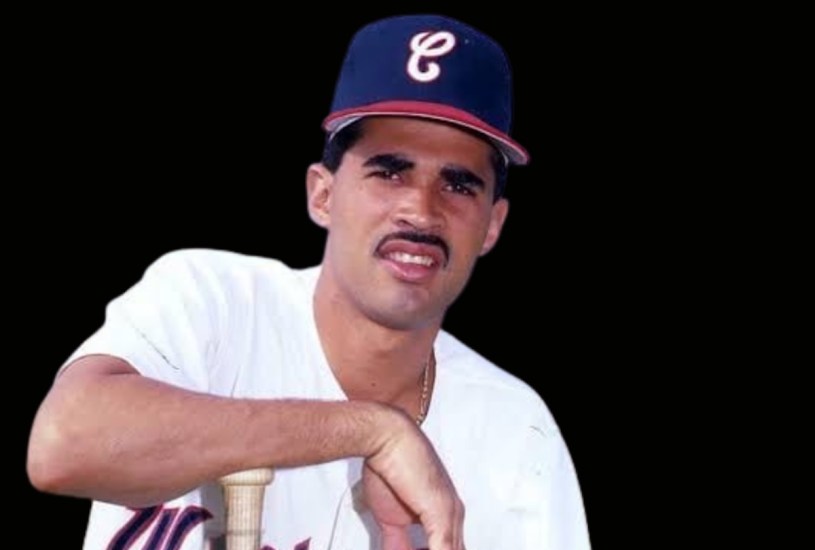
Last week on Friday Funday, we looked at one of those little-hit, all-glove shortstops who seemed to dominate the MLB landscape in the 1970s and 1980s before the position got redefined in the 1990s by a slew of slugging All Stars. Today, we take on another one: Ozzie Guillén. In a 16-season, major-league career, he compiled 23.0 dWAR and just 10.4 oWAR on his way to three All-Star nods and a single Gold Glove win—despite topping the American League in dWAR three straight years and not winning for that.
Guillén won the AL ROTY vote in 1985 and spent his first 13 seasons with the Chicago White Sox, before winding down his career with briefer stops in Baltimore (1998), Atlanta (1998-1999), and Tampa Bay (2000). He later managed the White Sox to their first World Series title since 1917 when he steered the Pale Hose to the championship in 2005, winning the AL MOTY nod in the process. All in all, he led a pretty charmed life, we’d say, in terms of baseball achievement and employment, in every way.
Let’s start at the beginning of this little-hit, all-glove narrative, though.
Under the guidance of Manager Tony La Russa, Guillén was the starting shortstop as a rookie for the White Sox in 1985, compiling 2.3 WAR for an 85-win team. His .650 OPS (and 74 OPS+), but his defense was stellar: 1.8 dWAR in 150 games. This would be a baseline for most of his career (69 OPS+ overall), as he never really turned into anything more than an average hitter, if that. His .626 lifetime OPS wasn’t even enhanced by base stealing, as he only stole 169 bases while being thrown out 108 times.
Nonetheless, his defense solidified his starting role in Chicago for all 13 seasons there (except 1992, when he was hurt and played in just 12 games overall). That rough knee injury, early in his age-28 season, changed the course of his career, though, as after playing in at least 149 games in each of his first seven years, he only reached 150 games in a season one more time (1996) in his MLB tenure. It did also change his SB capabilities, but his career steal percentage up to that point was mediocre, anyway (63.3%).
That demarcation line—pre-injury and post-injury—is visible to the naked eye, and it’s a shame. Before the injury, Guillén topped the AL in dWAR three straight years (1986-1988, totaling 10.3 dWAR) without winning a Gold Glove, oddly. He followed that trio of years up with three more very good seasons (1989-1991, totaling 6.9 dWAR) and winning the GG vote in 1990 as the White Sox pushed the defending-champion Oakland Athletics in the AL West Division race. But then the injury happened, and … yeah.
The rest of his career was rougher in the field, as Guillén managed just 3.5 dWAR total from 1993-2000. As a result, in his final three seasons with the three other teams, he was not the primary starting shortstop as his defense was not what it had been. It’s a shame injuries for that time period were so devastating, as to change the career arcs and trajectories of so many players, but timing is everything in this universe, as we know. Guillén had it good for a lot of years before that, so we know his peak pretty clearly.
Sadly, the White Sox only reached the postseason once with him on the roster (1993), losing to the defending champion Toronto Blue Jays in the AL Championship Series. In that six-game matchup, Guillén hit .273 with two RBI and one SB. Eventually, he bottomed out in Chicago, hurting the team with minus-1.1 WAR in 1997 as his .612 OPS and minus-0.8 dWAR signaled the end of his tenure with the Pale Hose. But from 1985 to 1997, he saw his annual salary jump from $60K to $4.5M, so he did fine there.
After the Chicago front office let him walk, the Baltimore Orioles—coming off a 1997 postseason appearance that saw them reach the ALCS—signed Guillén to a one-year, $450K deal to provide infield depth behind shortstop Mike Bordick and third baseman Cal Ripken, Jr. That 90-percent compensation reduction really shows how hard his performance dropped off a cliff in 1997, although in truth Guillén had posted negative WAR in both 1995 (-0.4) and 1996 (-0.8), as well. The injury really did sap his will.
The situation in Baltimore did not work out, however: he played in just 12 games to the tune of minus-0.3 WAR before the Orioles outright released him on May 1, and then it was the Atlanta Braves turn to take a chance on him a few days later. The Braves would play in the NLCS for the seventh straight postseason with Guillén actually contributing a lot, however. He posted 1.2 WAR in 83 regular-season games for Atlanta, hitting .277 and playing positive defense (0.5 dWAR). Guillén also hit 385 in the playoffs.
Alas, the Braves ran into Bruce Bochy and his PED Padres from San Diego in the NLCS, falling short of the Series. Yet Atlanta had seen enough to give him a $100K raise in re-signing him for the 1999 season, even though it would be his age-35 season. His 1999 campaign didn’t work out so well, as he put up a minus-0.5 dWAR effort, although his 92-game effort didn’t stop the Braves from reaching another World Series in 1999. He only received nine ABs in the postseason, however, with one hit as Atlanta lost.
Guillén then spent his final MLB season in Tampa Bay, surging a wee bit at the end of all things with a 1.0 WAR effort in 63 games with the expansion Devil Rays. His glove was still his strength (0.8 dWAR), appropriately so. The Tampa Bay organization was pleased enough at the time to re-sign him for the 2001 season, but he ended up formally retiring before that campaign began. His career 21.0 WAR mark falls well short of any Cooperstown thresholds; his defensive prowess pre-injury really defined him.
That’s the way we remember him the most, even after his managerial time with the White Sox, which saw him lift the curse of the Black Sox from the franchise. In eight years leading from the dugout, Guillén pushed Chicago to the postseason twice (2005, 2008), and eventually, the team traded his managerial rights to the Miami Marlins, where he managed one final season (2012). As we are wont to say, he made out well with the tools he was given, and we have deep appreciation for players like him, for sure.
 Daily McPlay: (mostly) Historical Sports Analysis with TENACITY & VERVE