
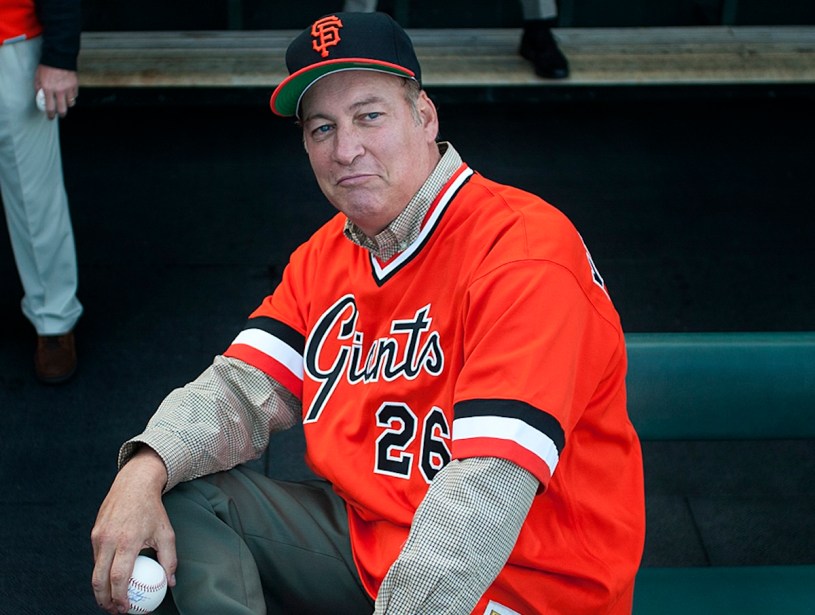
Our MLB Monday column is one of our favorites, as we can do stuff like this entry today: John Montefusco. He burst on to the MLB scene in 1975, winning the NL Rookie of the Year vote, and then he followed it up with a Cy Young-worthy effort in 1976. Yet after compiling 13.7 WAR in those two seasons alone, the Count earned just 6.2 WAR in his other 11 MLB seasons put together. That’s a rough end to a career that had so much promise. So what happened to Montefusco?
There are the official details of his life and times here; we prefer to augment that with a purely statistical analysis. What we see is a young arm that tossed 497 MLB innings in 1975 and 1976—and then only reached 200 IP in a season one more time in a 13-season career. In fact, with a mere 1,652-plus IP in his career, Montefusco threw about 30 percent of his lifetime innings in just 15 percent of his service time. Coming so early on, we’re guessing his arm just couldn’t keep up.
Yet we know an ankle injury set him back in 1977, and without that strength in the legs, his performance fell off over just 157-plus IP. But he returned in 1978 to toss over 238 IP, not knowing it was going to be one of his last hurrahs. Montefusco threw just 250 IP in 1979 and 1980 combined before the San Francisco Giants traded him to Atlanta, where he had pitched a no-hit game against the Braves in final game of the 1976 season. We suspect the Atlanta owner remembered that one …
Nevertheless, he didn’t even make it 80 IP in 1981 at age 31. The San Diego Padres took a chance on him for the 1982 season, signing him as a free agent, but the Count put up a 4.00 ERA that season before the Padres traded him to the New York Yankees during the 1983 season. Clearly, George Steinbrenner was hoping Montefusco had something left in the tank at age 33. Some of his combined 1983 numbers, in only 133 IP, looked good (14-4, 3.31 ERA), but a 1.313 WHIP hurt.
After that 1983 renaissance, Montefusco tossed less than 75 IP for the rest of his career, all spent with New York (1984-1986). He packed it in at that point, done at age 36, with just 90 victories in his MLB tenure. He never reached the postseason with any of his four teams, and the promise of his first two full seasons in the Show never was fulfilled, really. His 3.54 ERA is moderately impressive, but over time, the lack of wins in a 13-year professional baseball journey is clear.
Maybe he just burned out; injuries certainly were an issue. Playing for teams that never made the playoffs also hinders a player’s general energies and motivations. When with the Giants, Montefusco was known for his venom toward the Los Angeles Dodgers, a vibe which carried over to the San Francisco fans in an era out West where the Dodgers were winning a lot—and the Giants were not. He was a lightning rod for that NorCal discontent for/resentment of the City of Angels.
In addition to topping all NL pitchers in WAR once (1976), the Count’s only other statistical crowns were being best in the league in K/9 rate in 1975 and shutouts in 1976. That latter season was the sole one where Montefusco was selected for the All-Star Game. In his seven seasons with San Francisco (1974-1980), the Giants never ended up higher than third and averaged finishing 21.6 games out of first place in the NL West. He may have been a hero in San Francisco, with no glory.
Even in the Big Apple, though, he won just 10 games in three-plus seasons as age and injuries took their toll on his body. It was that era where Steinbrenner loved to overpay for over-the-hill talent, and Montefusco should have had no complaints making around $3M while with the Yankees. Yet even if the Count only shone brightly for a few years in the mid-1970s, we know most little boys would gladly take a career like that. It’s better to be a comet, after all, than nothing.
 Daily McPlay: (mostly) Historical Sports Analysis with TENACITY & VERVE