
As the long national nightmare continues, it’s time for another NHL Saturday entry that takes us back to a better time? 1949, to be exact. We’re now in the original decade of the Original Six, so we will be going back to 1943 here (for now?). It’s a fun exercise, but sooner or later, there’s just not enough data to make informed decisions. We’re not sure when that line will be crossed in the professional hockey world of North America.
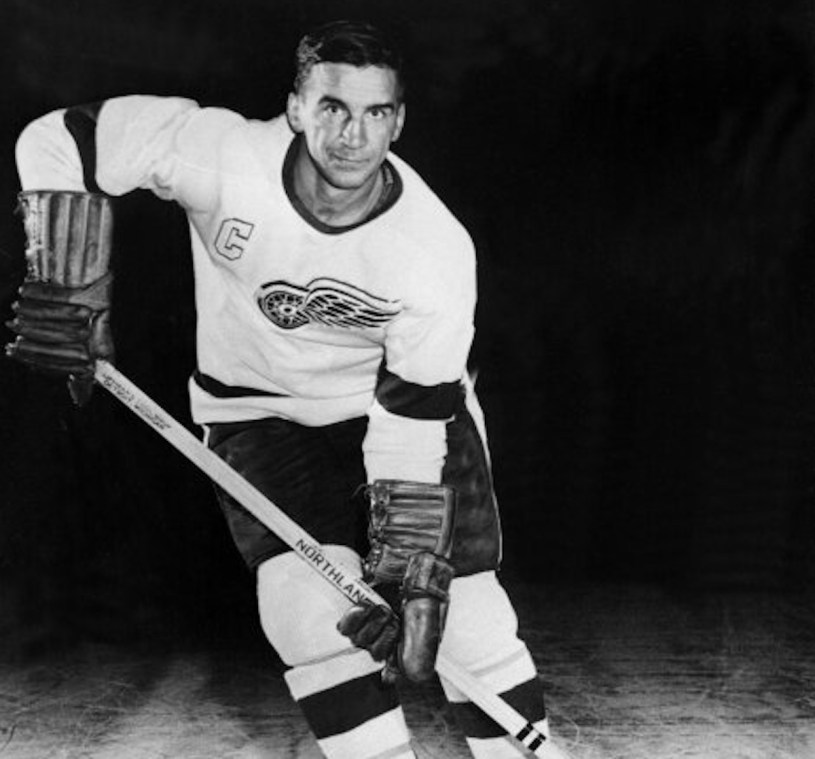
1949 Hart: Sid Abel, C, Detroit (original); Ted Lindsay, LW, Detroit (revised)
Four forwards finished in the NHL Top 10 for Point Shares: Chicago left wing Roy Conacher (7.4); Detroit LW Ted Lindsay (7.4); Red Wings center Sid Abel (7.3); and Black Hawks C Doug Bentley (7.1). Normally, teammates would cancel each other out, but with Abel winning the Hart vote, we have to sort this out here with this quartet. Chicago missed the postseason by a whopping seven points, too, so we’re already stuck.
Lindsay or Abel? Detroit finished in first place, nine points ahead of Boston, in a 60-game season. The former played in only 50 games, which makes him more valuable on a per-game basis, while the latter played in all 60 games, topped the league in goals scored (28), and also was best in the NHL at scoring goals on special teams (8). To us, this comes down to a PPG measurement, and Lindsay wins in that department.
Abel and Lindsay both finished with 54 points: playing in fewer games gave Lindsay the higher sabermetric value in Point Shares but also in the points-per-game category as well. We know the contemporary media didn’t have it strapped on fully at the time, so, again, this is why were are here: to correct the errors of the past. The Red Wings were good, and both guys were needed, but Lindsay just meant more when he played.
1949 Norris: Glen Harmon, Montréal
The only defenseman in the NHL Top 10 for Point Shares also finished first in Defensive Point Shares: Montréal Canadiens veteran Glen Harmon. So it’s easy to give him the non-existent Norris for 1949. With 7.1 PS overall, he finished ninth in the league, and his 5.1 DPS mark was tops by 0.4 DPS over his teammate Doug Harvey. Montréal finished third, one point behind Boston, and Harmon was a big reason why it was.
1949 Vezina: Bill Durnan, Montréal (original, confirmed)
There were three goaltenders who finished in double-digit PS for the season: Montréal’s Bill Durnan (13.9); Detroit’s Harry Lumley (11.9); , and Toronto’s Turk Broda (10.2). Durnan won the Vezina for giving up the fewest goals in the league, and while Lumley topped the NHL in wins (33), it was Durnan who led his peers in GAA (2.10) and shutouts (10). Broda finished with a losing record for the fourth-place Maple Leafs. Doh!
Lumley played on the better team, and that’s reflected in his wins. Durnan was the reason the Canadiens finished as well as they did, and that’s reflected in his league-high statistics. We confirm the award, for the second win in a row here for Durnan.
1949 Calder: Pentti Lund, RW, New York (original); Allan Stanley, D, New York (revised)
Only three players earned votes for the Calder: New York Rangers defenseman Allan Stanley (2.8 PS); his teammate at RW, Pentti Lund (2.6); and Toronto LW Ray Timgren (0.7). Lund won the vote; Stanley gets our nod. The Rangers finished dead last, three points behind Chicago, and while the Leafs made the playoffs, we’re not giving a major award to someone as insignificant, sabermetrically, as Timgren. Oh well.
By the way, we gave Stanley our 1961 Norris, too, so he went on to have a pretty stellar career.
1949 Conn Smythe: Turk Broda, G, Toronto
Strangely, however, the fourth-place Leafs came alive in the playoffs, going 8-1 overall in beating both Boston (4-1) and Detroit (4-0). Guess who got hot in the postseason?! Well, everyone, as this team was outscored by 14 goals during the regular season before catching fire and outscoring its two opponents in the postseason by a 28-15 margin (16-10 over the Bruins and 12-5 over the Red Wings) with a Cup Finals sweep!
No skater posted even a point per game, and six different skaters scored game-winning goals. However, the guy in net—Broda—was outstanding, posting a 1.57 GAA mark in the nine starts with one shutout. And when you cough up just five goals in a four-game sweep of the No. 1 team from the regular season, you have caught lightning in a bottle. It’s hard to ignore this example of a mediocre team riding a hot goalie to glory.
 Daily McPlay: (mostly) Historical Sports Analysis with TENACITY & VERVE