
Our NHL Saturday piece today checks in on the 1954 season of the Original Six in North American professional hockey. Interestingly, this was the first official year of the Norris Trophy, annually given to the “best” defenseman in the league. We will go on giving away Norris hardware until this miniseries prequel ends with the 1942-1943 season, but we just thought we should point this out now, in case you were curious.
1954 Hart: Al Rollins, G, Chicago (original); Gordie Howe, RW, Detroit (revised)
Well, since the start of our analyses so long ago now, we’ve made it the domain of forwards to win the Hart, since goaltenders had the Vezina and blueliners had the Norris. So this year’s vote winner, goalie Al Rollins of the Chicago Black Hawks, won’t be getting our hardware. But we want to point out his team finished last; he posted just 4.3 Point Shares; and his record was 12-47-7 with a 3.21 GAA and five shutouts. Interesting.
But we digress: only two forwards were in the NHL Top 10 for Point Shares: Detroit Red Wings right wing Gordie Howe (11.6) and Montréal Canadiens RW Maurice Richard (10.1). You may have heard of them. The Red Wings finished first with a seven-point margin in the standings over the Canadiens, and Montréal still had a 13-point cushion for making the postseason. So, we see Howe as more valuable here in the standings.
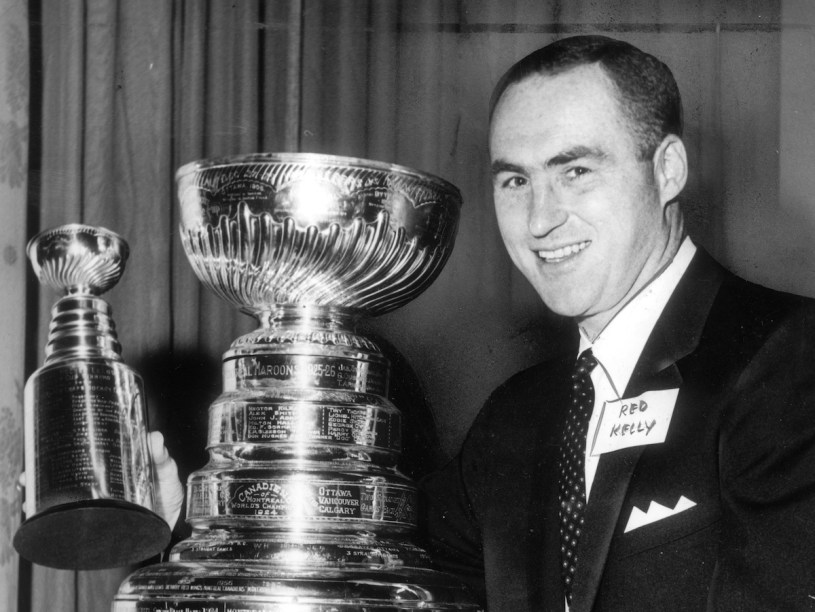
1954 Norris: Red Kelly, Detroit (original, confirmed)
Three defensemen finished in the Top 10 for Point Shares, showing us that the game of the era was about goal prevention. Detroit’s Red Kelly (11.3) won the first Norris vote, but Toronto Maple Leafs legend Tim Horton (8.9) and Montréal stalwart Doug Harvey (8.9) were not too far behind. Where did the Leafs finish in the standings? Three points behind Les Habs. Let’s look at the Top 10 DPS finishers next for clarity, okay?
All ten blueliners finished between 5.1 and 5.9 DPS, led by Horton (5.9) and ended by Kelly (5.1). Overall, four Maple Leafs are in this Top 10, while only three Red Wings and three Canadiens are on the list. So, that eliminates Horton, since he had the most help in the defensive zone. This looks like the same logic as we had above for the Hart: Kelly was doing more with less support, and it mattered more in the standings, too.
1954 Vezina: Harry Lumley, Toronto (original, confirmed)
Two netminders separated themselves from the pack here, easily: Toronto’s Harry Lumley (15.6 PS) and Detroit’s Terry Sawchuk (14.5). Lumley won the award, as the Leafs surrendered one less goal than the Wings did on the season. And he also had the higher PS mark, as we know where each team finished in the standings. We also know both goalies had excellent defense corps ahead of them on the ice in their zone.
What we like about Lumley best is he topped the NHL in GAA (1.86) and shutouts (13). Sawchuk wasn’t far behind (1.93, 12), but his team was a lot better from top to bottom. Also, Lumley started three more games than Sawchuk did, too, so there was a workload factor to measure in here as well. We will confirm the award. This is Lumley’s first nod of any sort from us, too. We think it is deserved, obviously.
1954 Calder: Camille Henry, LW, New York (original); Dutch Reibel, C, Detroit (revised)
After leading the league in power-play goals with 20, New York Rangers first-year left wing Camille Henry (5.4 PS) won the Calder vote. The only other true candidate in our eyes was Detroit C Dutch Reibel (5.7), who had the benefit of playing for the best team in the league. The Rangers finished in fifth place, six points out of a postseason berth. That’s usually a DQ right there, and Reibel had the better PS mark, in addition.
1954 Conn Smythe: Terry Sawchuk, Detroit
The Red Wings won another Cup, after beating the Leafs in five and then the Canadiens in seven. In fact, Game 7 went into overtime, and perhaps this is where the adage, “There’s no such thing as a bad shot in overtime,” originated. Little-known winger Tony Leswick tossed the puck from the far boards at the net, and it went in to give Detroit its third Cup title in five seasons at the time (1950, 1952). What a moment!
That being said, no Red Wings skater finished with anywhere near a point per game, while Sawchuk was pretty brilliant under the circumstances (8-4, 1.60 GAA, two SOs). Combined, the Canadiens’ two goalies were better (1.52 GAA, three SOs), but the load was split between them. In the end, we’re giving this Conn Smythe nod to Sawchuk—the first time we’ve done so. Oddly, he never won one in real life, so there’s that.
 Daily McPlay: (mostly) Historical Sports Analysis with TENACITY & VERVE