
We examined some context, data, and perspective last summer about quarterback sabermetrics on NFL Thursday, and with a week to go in the 2024 regular season, we’re going to re-visit some progressive information here—because it’s pretty shocking. We are going to start with the 1977 season, the last before rules changes opened up the NFL passing game as we know it today, as it is a good demarcation line.
1977: The league leader in QB rating was Miami Dolphins Hall of Famer Bob Griese (87.8), and the average QB rating in the league was just 61.2 overall. The “worst” QB named to the Pro Bowl was St. Louis Cardinals veteran Jim Hart (64.3). Only six quarterbacks posted a QB rating higher than 75.0 during the season.
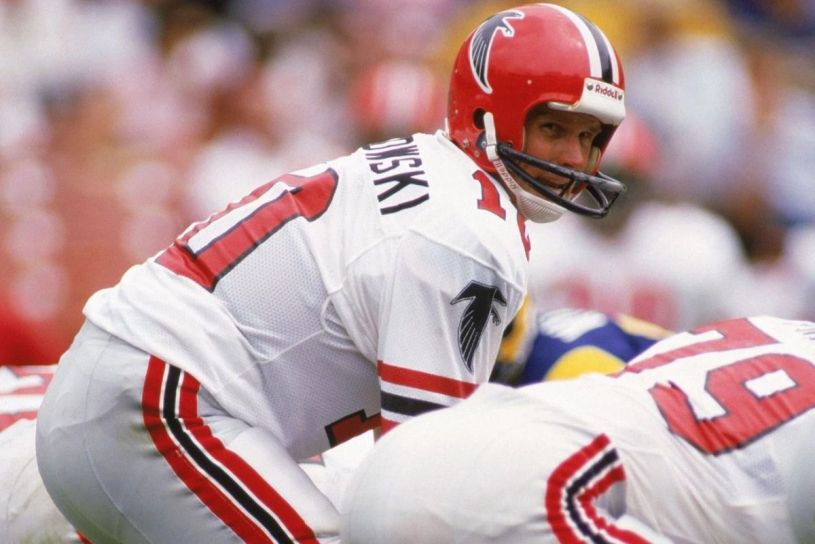
1981: The arrival of the misnamed “West Coast Offense” was complete with the San Francisco 49ers winning their first Super Bowl. Cincinnati Bengals star Ken Anderson topped the league (98.4), while the average rating (72.9) had jumped more than 10 points in just a handful of years. The “worst” Pro Bowler still posted a 79.2 rating (Atlanta Falcons stalwart Steve Bartkowski). Eight QBs posted ratings above 80 points, total.
2000: We jump forward to the turn of the century with the arrival of “The Greatest Show on Turf” that won the Super Bowl the prior year. In a cute twist, Denver Broncos starter Brian Griese (102.9) topped the league in QB rating, while the league average (78.1) was rising, accordingly. The lowest Pro Bowler mark belonged to Philadelphia Eagles youngster Donovan McNabb (77.8), who did a lot with his legs as well.
2012: This season sits in the middle of this century’s seasons so far, as Green Bay Packers icon Aaron Rodgers (108.0) posted the best QB rating, and the league average jumped to 85.6 overall. Meanwhile, rookie QB Andrew Luck somehow made the Pro Bowl, despite his 76.5 QB rating; we’re guessing this was a result of a popularity-contest vote, really, which happens sometimes.
2024: Baltimore Ravens sensation Lamar Jackson leads the NFL in passer rating (121.8), currently, and the league average is 92.2 at the moment. We don’t have any Pro Bowl information yet, but suffice it to say, 11 QBs have ratings at 99.9 or higher, which is insane when we think about how the numbers have evolved.
To summarize, the top mark in the league has jumped from 87.8 in 1977 to 121.8 in 2024; the average rating has increased from 61.2 to 92.2 over the same time period; and the low-bar Pro Bowl mark hasn’t actually changed much, due to a variety of factors (including timing of the game itself and injury-related skips). What does this tell us, in general? Data analysis improved and impacted coaching/playing tremendously.
This means passing schemes are optimized for efficiency and success in moving the ball down the field. Completion percentages are much higher; yards per attempt, therefore, rise as well. Secondary impacts are found in higher touchdown percentages and lower interception percentages. These are the four categories that comprise the QB rating; thus, the rules allowed offenses to thrive through the air unlike never before.
 Daily McPlay: (mostly) Historical Sports Analysis with TENACITY & VERVE