
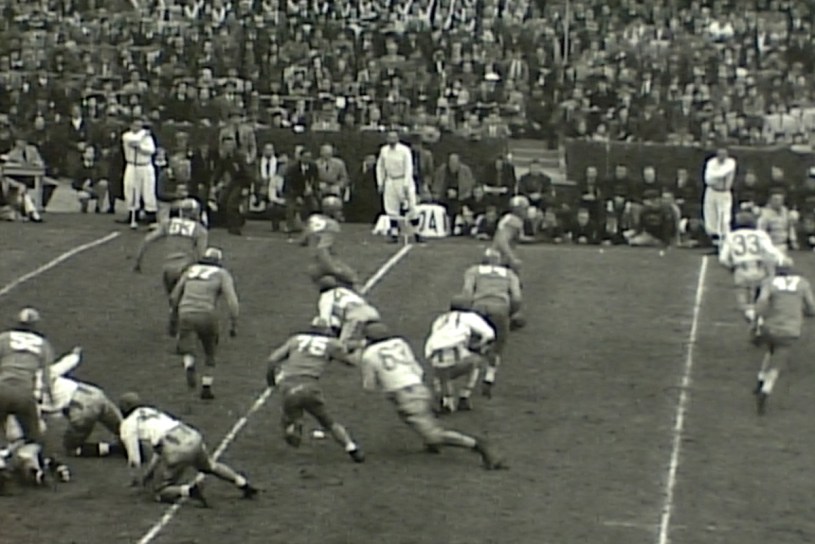
The memories we explore on Rose Bowl Friday are significant since college football as we once knew it is dead, for better or for worse. This season, for example, the Granddaddy of Them All is merely a playoff quarterfinal—when it, honestly, should be the semifinal or the final every year. It’s been that great of a tradition in the sport … and in the nation, really. But we all know why we cannot have nice things now.
That being said, the culmination of the 1939 regular season featured the defending Rose Bowl champions and a new challenger was a great moment: with a new record 92,200 fans in attendance, the USC Trojans took on the Tennessee Volunteers—our defending mythical national champions, no less. Both teams had a shot at this season’s MNC crown, as our analysis here demonstrated many years ago. Warning: spoilers!
First, the Volunteers: they came into the game 10-0 but ranked just second, despite not giving up a point all season long. The SOS rating (69th) was not impressive, however, and the team finished just eighth in the SRS overall. Still, the expectation was that Tennessee could handle whichever team it faced on New Year’s Day. The offense averaged over 20 points per game against eight big-time opponents during the season.
However, the Vols had scored just 39 points in their final three games combined, so the concerns were there. Meanwhile, the Trojans were 7-0-2 and ranked third, after playing the No. 42 SOS and finishing seventh in the SRS overall. USC had tied both Oregon and UCLA in conference play, but otherwise, the Trojans were undefeated against major-college competition during the regular season, and they wouldn’t surrender now.
Whether it was the weak schedule or the long train ride west, the Vols didn’t have it in them on this day, losing 14-0 to USC. The Trojans ran for 229 yards on the Tennessee defense, scoring a rushing touchdown in the second quarter and a passing TD in the fourth quarter. Thus, USC moved to a perfect 6-0 in Rose Bowls after this, establishing an early legend and legacy in the Granddaddy that would endure for decades more.
Editor’s Note: The two schools would have a Rose Bowl rematch in five seasons, ironically enough, during World War II. Stay tuned for that column in a month or so from now.
 Daily McPlay: (mostly) Historical Sports Analysis with TENACITY & VERVE