
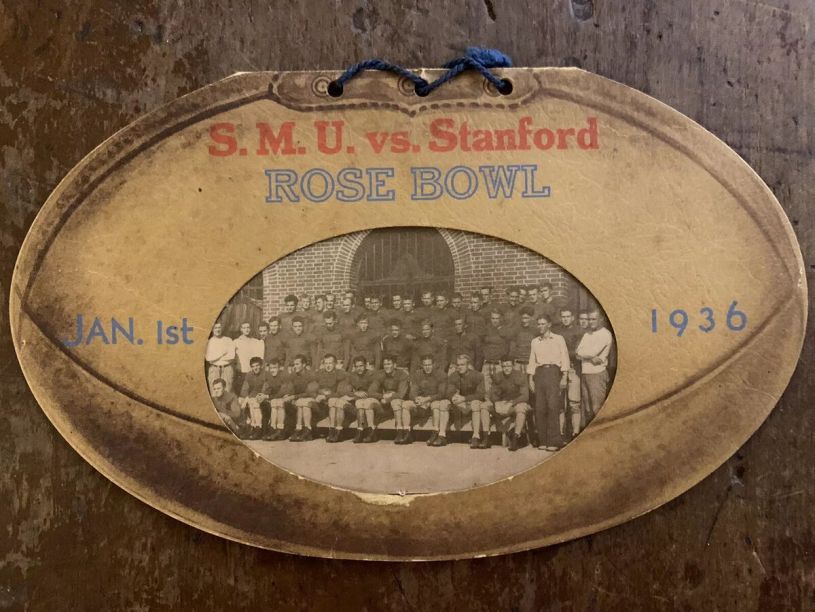
Stanford University was the first school to participate in three straight Grandaddies of Them All, and this week on Rose Bowl Friday we look at the final game of the sequence. The Indians lost two consecutive Pasadena matchups, but they returned for a third go. And you know what they say, right? If at first you do not succeed, try and try again?! After all, the third time is the charm, too: Stanford 7, Southern Methodist 0.
First, though, we offer context: Stanford came into the game with a 7-1 record, having given up just 13 points all season. The Indians played seven big-time opponents (still with the No. 9 SOS) and the No. 1-ranked defense in the country. Even so, these data points were only enough to put Stanford at No. 10 in the SRS overall. Why? Because the Indians barely ever scored, either: they averaged just over 14 points a game.
Regardless of the opponent, the matchup was expected to be a low-scoring affair. Enter Southern Methodist University. The Mustangs were 12-0 and ranked No. 3 in the SRS overall, with the No. 13 offense and the No. 4 defense—all this accomplished against the No. 31 SOS. The invitation to invite SMU was odd, though, since it was the first time the non-West Coast participant would also be one west of the Mississippi River.
But tapping into the Texas football atmosphere was a smart move: the game’s organizers received ticket requests for 200,000 over capacity, and after this game, the Rose Bowl Stadium attendance would be increased steadily over the next decade-plus to accommodate more visiting fans than ever. Within 15 seasons, the Pasadena facility would be able to seat more than 100,000 fans for annual Rose Bowl games.
So, back to the game: Stanford scored in the first quarter to take a 7-0 lead, and then the defense did the rest in the shutout victory for the Indians. The two offenses combined for 25 punts, and the SMU offense turned the ball over seven times (six interceptions, one fumble). The fumble occurred at the Stanford 5-yard line, too, one of the best defenses in the history of the Rose Bowl did its job, start to finish, here in early 1936.
This was SMU’s first and only Rose Bowl. But it was the school’s first marquee appearance on the college football scene. The Mustangs have a very checkered history in the sport of college football, and perhaps it all started because of this moment in the California sun. As for Stanford, it would be another five years before the school returned to the scene of this special victory (just the team’s second victory in seven tries).
 Daily McPlay: (mostly) Historical Sports Analysis with TENACITY & VERVE