
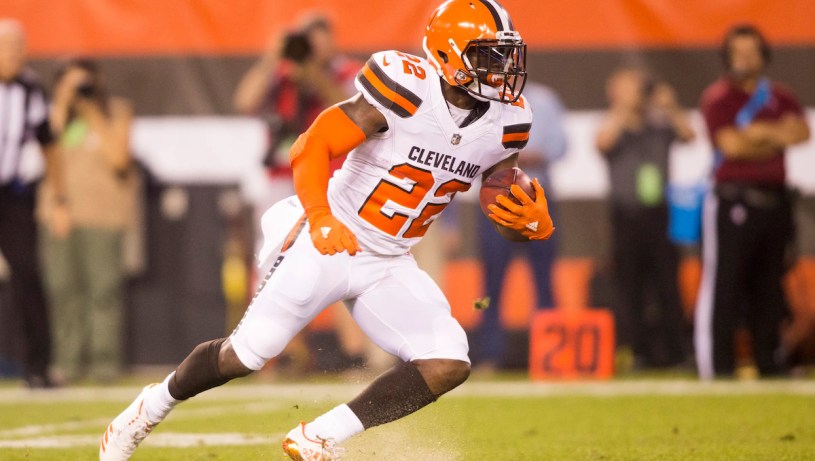
Last week, before the 2024 NFL season opener, we took a peek at the 2008 Detroit Lions, the first team to go winless in a 16-game season. Today we do the same for the 2017 Cleveland Browns, who matched the Lions for futility with their own winless campaign. We can surmise similarities and differences in the two experiences and see what conclusions we might be able to draw from the analyses. This should be fun, right?
First, let’s look at the longue durée here: like the Detroit franchise, the Cleveland organization had been in a dismal stretch since its “rebirth” in 1999. From that point to 2016, the Browns had just a single postseason appearance (2002), and in the years prior to 2017, the team had not posted a winning record since 2007. In fact, Cleveland’s nine seasons leading up to the winless season featured just an average of 4.2 wins per year.
The Browns went 3-13 in 2015 and 1-15 in 2016, so this was a decline anyone should have seen coming, for sure. Yet the sabermetrics suggested that the Cleveland roster should have been able to win at least three games in 2017: once again, there is always some bad luck involved with going winless. Yes, the team needs to be pretty bad to begin with, but the game-day luck factor also has to be working against you. It’s just sport.
And that’s what happened to the Browns, even with the worst scoring offense and the second-worst scoring defense in the NFL. In truth, Cleveland posted a better scoring margin in 2017 (minus-176) than it did in 2016 (minus-188), so the team “improved” in that sense, helping that sabermetric projection for three victories. The Browns lost twice in overtime during their winless season as well, which stands out for luck.
Overall, Cleveland lost four times in its first eight games by only three points each time, so the team could have been 4-4 with some better fortune—or at least 2-6 with any luck. Instead, the Browns hit their bye week with an 0-8 record and not a lot of confidence: the Week 7 loss in overtime to Tennessee was brutal, as Cleveland won the toss, had the ball twice (but went three-and-out both times), and still lost the game. Oi!
In the second half of the season, only thrice did the Browns come within single digits of their opponents: a 19-10 loss at San Diego to fall to 0-12, followed by a 27-21 OT loss at home to the Green Bay Packers the following week; and then a four-point loss at Pittsburgh in the season finale. The loss to a talent-depleted Packers team was pained as Cleveland gave up 14 points in the fourth quarter to blow a 21-7 lead in regulation.
Green Bay had Brett Hundley at quarterback that day, and once again, the Browns won the OT coin toss but went three and out before the Packers marched down the field and scored a touchdown to win. Then, against the Steelers, Cleveland fought back from a second-quarter, 14-0 deficit to tie the game at 21 in the third quarter—before immediately giving up a kickoff-return TD to fall behind again and eventually lose.
Maybe we can blame this on the coaching staff, but we’re more inclined to blame the front office for putting together a weak team after suffering through a 3-13 season the season prior. Rookie QB DeShone Kizer ended up starting 15 games in 2017, and while he was a second rounder, not much in his college career suggested he’d be a good pro signal caller—and he was out of the NFL by 2019 as well. Terrible idea, right?
Kizer had started just 25 games at the collegiate level with a mere 60.8-percent completion rate, so it was a stretch to even think he’d make it work with so little talent around the QB position: only two skill-position players managed more than 400 yards from scrimmage, and both were running backs. Duke Johnson and Isaiah Crowell combined for 9 TDs and 5 fumbles, though, pretty much canceling out the positives there.
Each totaled more than 1,000 yards from scrimmage, but Kizer really had no one to throw the ball to: Johnson topped the team with 693 receiving yards, and no true pass catcher surpassed 400 yards receiving. That’s an easy offense to shut down. The overrated Jabrill Peppers had been the team’s No. 1 draft choice after an interesting college career where he was a jack of all trades, but he was never used on offense. Why?
Coaching. But again, with such a bare cupboard, there’s only so much blame to put on Head Coach Hue Jackson: he had posted an 8-8 mark in his one season leading the Oakland Raiders (2011) before being let go by a moronic front office. He deserved better with the Browns, but after a 2-5-1 start in 2018, the Cleveland organization let him go, too. His 3-36-1 record as Cleveland’s head coach doesn’t tell the whole story, obvi.
Thus, for both the 2008 Lions and the 2017 Browns, we see front-office buffoonery as the primary cause for failure, augmented by bad luck on the field of the play. Talent is talent, and luck is luck—but bad team management can undermine it all, every time. On December 7, 2017, both the VP of Football Operations (Sashi Brown) and the GM (John Dorsey) were fired, but it obviously was way too little … and way too late.
 Daily McPlay: (mostly) Historical Sports Analysis with TENACITY & VERVE