
Our newest NBA Tuesday miniseries takes on the short history of the WNBA and will examine the four major awards in analytical terms—just like we did with the men’s side. We decided to invest in season tickets (as a “fan”, a “historian”, and a “journalist”) for the Golden State Valkyries, so we’re going to put some energy, resources, and time into preparing for the 2025 women’s basketball season in San Francisco.
But first, a few notes: for starters, there were two pro leagues for women after the 1996 Summer Olympics in Atlanta sparked the interest in the sport (not to mention the University of Connecticut women’s 1995 national championship run, where they went undefeated in the new “Internet age”), so that impacted some awards here. Also, many of the players in the WNBA’s first season, and subsequent years, were not rookies.
We will manage that distinction on a case-by-case basis. And lastly, we’re using the same parameters we used for the NBA analyses over the last four-plus years: sabermetric data and team success. We want to be consistent and equal in the way we cover all aspects of professional basketball in America. That being said, we hope the audience enjoys this exploration of the WNBA (and we apologize for ignoring the ABL, too).
1997 WNBA MVP: Cynthia Cooper, G, Houston (original, confirmed)
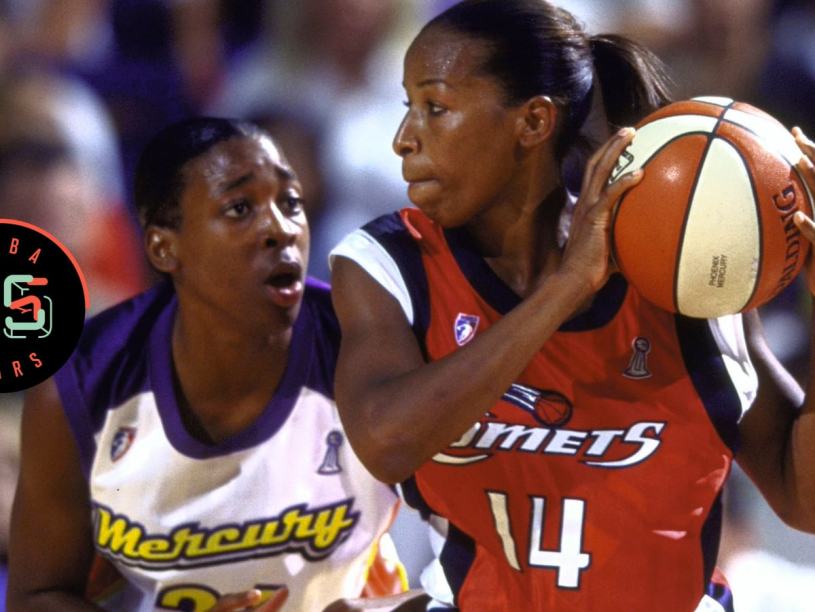
Guard Cynthia Cooper was already a legend in the sport when the WNBA set up shop, having stopped the Soviet women in the 1986 World Championships and winning a gold medal in the 1988 Summer Olympics. Yet at age 34, she still dominated the first season of the WNBA with 9.2 Win Shares—almost 5 WS more than the next-best player in the league—and a 32.2 Player Efficiency Rating for the Houston Comets.
The league only had eight teams, and with four of them making the postseason, every win in the 28-game season clearly mattered. The Comets posted an 18-10 record to top the Eastern Conference, and without Cooper, they might have missed the playoffs altogether, since every team in the East finished with a winning record. She won the MVP vote at the time, and we will confirm it, readily. Definitely a rock star.
1997 WNBA ROTY: Rushia Brown, F, Cleveland
There was no ROTY award in this inaugural season, so we’re going to pick one from among the players under 25 years of age (a generic approximation of experience at this point in time—and a fair one, really). We really only have one candidate here, though: Cleveland Rockers forward Rushia Brown. At age 25, she played in all 28 games and finished second in the league to Cooper in Win Shares per 48 Minutes Played.
Her traditional stats: 6.3 ppg, 4.0 rpg, and 1.2 spg. Cleveland finished 15-13 in the Eastern Conference, losing a tiebreak to the Charlotte Sting for the final postseason berth. She was eighth in the league for PER (20.2), and it’s clear the Rockers should have played her more than the 18.3 mpg they did; perhaps the franchise would have earned a postseason spot outright, and then it wouldn’t have folded after just 7 years.
1997 WNBA DPOY: Teresa Witherspoon, G, New York (original); Vicky Bullett, F, Charlotte (revised)
Seven players finished 2.0-plus Defensive Win Shares, and New York Liberty guard Teresa Witherspoon led them all with 2.4 DWS. That helped her win the DPOY vote, for sure, but what about the others on this short list? Liberty teammate Rebecca Lobo (2.0 DWS) was also good enough to win the award, so the two teammates cancel each other out—and three different Phoenix Mercury players posed 2.0-plus DWS, too.
That leaves us with Los Angeles Sparks center Lisa Leslie (2.2 DWS) and Charlotte Sting forward Vicky Bullett (2.0 DWS) as our legitimate choices. The Sparks finished just 14-14, though, and they missed the postseason, while Charlotte (15-13) won that tiebreaker over Cleveland for the last spot in the playoffs. So we will go with Bullett here, surprisingly: her 4.0 defensive boards, 2.0 blocks, and 1.9 steals mattered.
1997 WNBA FINALS MVP: Cooper (original, confirmed)
The playoffs were minimal in this first WNBA season: single-elimination “tournament” with only four teams playing, and the Comets beat the Sting by 16 in the semifinals and then dropped the Liberty by 14 points in the final. Cooper scored 25 points with 4 rebounds and 4 assists in the final, while shooting 7-for-13 from the floor. That’s good enough for us; with only 2 games to work with here, it has to be. Oh well.
 Daily McPlay: (mostly) Historical Sports Analysis with TENACITY & VERVE