
Olympic Wednesday returns to Innsbruck, Austria, for the 1976 Winter Olympiad, as the original host choice—Denver—could not convince its local population it was a good idea. Thus, Innsbruck stepped up to the plate, infrastructure intact, to welcome over 1,100 athletes from 37 nations. They competed in 27 medal events across 10 disciplines, and once again, the Games averted disaster to produce a fine showing for all.
Four nations reeled in a double-digit medal haul, topped again by the Soviet Union (27) and East Germany (19). The United States (10) and West Germany (10) finished tied for third, while the host nation earned just 6 total medals. France and Great Britain had a poor showing, earning just a single medal each. But the good news was that other than the Denver mishap, there were no controversies, and the Winter Games endured.
Most Outstanding Male Athlete: Bernhard Germeshausen & Meinhard Nehmer, East Germany (tie)
No man earned more than two medals at these Olympics, so this is a tough one: in fact, this comes down to two East German bobsledders: Bernhard Germeshausen and Meinhard Nehmer. They both won two gold medals as members of the GDR’s two- and four-man bobsleds. Incidentally, they would each get their own two-man sled in the 1980 Winter Games, neither winning gold, but they did repeat in the four man.
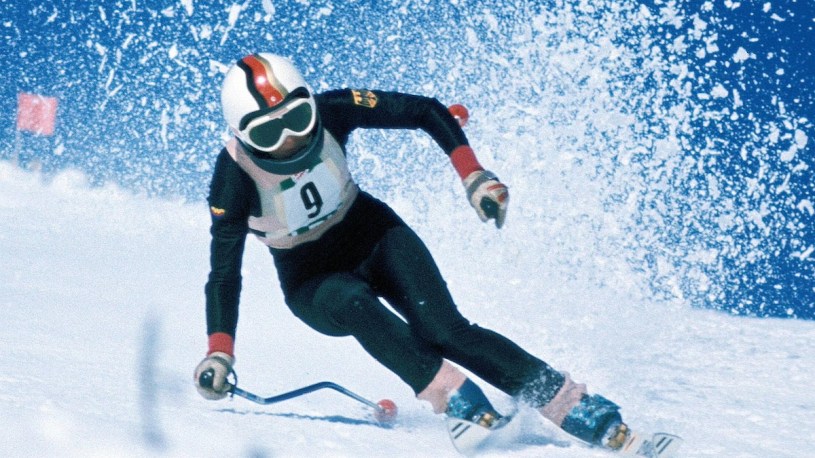
Most Outstanding Female Athlete: Rosi Mittermaier, West Germany
Five different women won at least three medals: the best of the bunch were West German alpine skier Rosi Mittermaier and Soviet speedskater Tatyana Averina. They each won two individual golds, while the former added an individual silver and the latter tacked on two individual bronzes. Mittermaier’s silver came by just 0.12 seconds, while Averina’s events covered the spectrum of events, from sprint to endurance.
It’s a tough call, but in the end, we’re going with Mittermaier, who was so close to winning three individual golds. She won the downhill and the slalom, and then she was barely edged out in the giant slalom. That’s good enough for us. We have no issue if someone else thinks Averina’s medals in 500m (B); 1,000m (G); 1,500m (B); and 3,000m (G) events are a “better” accomplishment. We totally understand that perspective.
Most Outstanding Male Team: Soviet Hockey
No nation dominated a competition more than the Soviet Union hockey team, as it won all six of its matches by a combined 56-14 score on the way to a fourth consecutive gold medal (1964, 1968, 1972, 1976). Vladimir Shadrin scored 10 times to lead all skaters; Aleksandr Yakushev and Viktor Zhluktov each registered 9 assists. The Soviets just overwhelmed all opponents in a dominant fashion to earn this nod.
Most Outstanding Female Team: Soviet Cross-Country Skiing
The Soviet women took home four of a possible seven medals in the cross-country skiing discipline, as Raisa Smetanina won gold in the 10km event and silver in the 5km competition. Other Soviet athletes won the bronze medals in both events, and they all combined to win gold in the 4x5km relay. Smetanina was one of the aforementioned five women to win at least three medals in these Games, and she led her team well.
 Daily McPlay: (mostly) Historical Sports Analysis with TENACITY & VERVE