
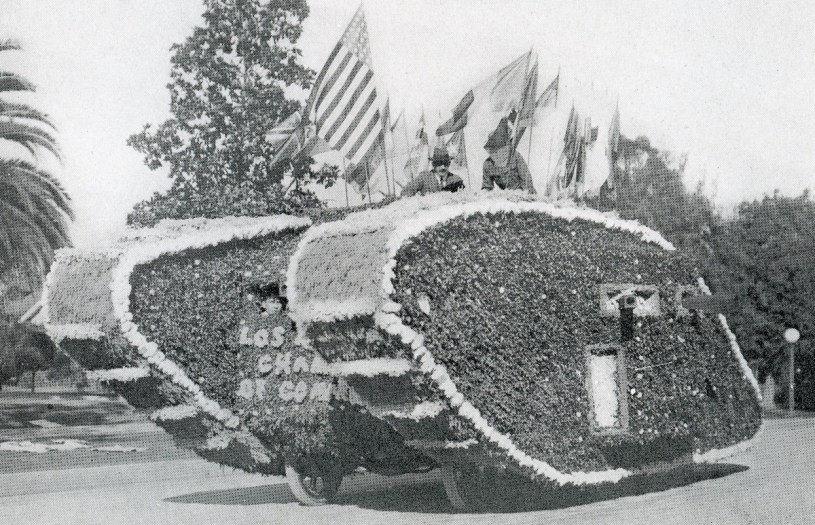
Our new Rose Bowl Friday miniseries experiences the effects of World War I today: there was no “traditional” East-West matchup in the Granddaddy of Them All. Instead, President Woodrow Wilson approved the use of military units, as the Mare Island Marines (California) took on the Camp Lewis Army (Washington) in the game. The Marines beat the Army, 19-7, in a game that was not decided until the end.
Mare Island went 7-0 in a regular season that is valid in the eyes of the NCAA historians as being legitimately considered major college football. The Marines beat California twice on the road in the space of three weeks to start their season off on the right course, and they also beat Oregon at home as well. Those were the only major-college victories on the season for Mare Island, however, with the travel restrictions.
However, the Marines also beat St. Mary’s College (California) and USC during the regular season, even though those schools were not yet playing what is now considered to be major-level football. With Mare Island’s northern proximity to the San Francisco Bay, the pickings for opponents were clearly a bit slim. Still, overall, the Marines outscored their seven opponents by a combined 181-3 margin. Seems unfair?
It probably was; as we discussed in our MNC analyses a long time ago, wartime military teams were somewhat stacked in terms of talent they’d plucked from the regular campuses via necessity. Mare Island would have been no exception to that rule. And they’d also already beaten Camp Lewis on the road once during the regular season as well, by a 13-0 score. The Marines were the best of the best, really, for 1917.
One interesting note here: the only score by Camp Lewis in the Rose Bowl was a touchdown earned on the ground by Dick Romney—a brother of Mitt Romney. And yes, the modern-day politician was named after this Mitt, a cousin of his own father, George. Small world. Romney’s TD gave the Army team its only lead (7-3) in the second quarter, before Mare Island scored 16 unanswered points to win the game going away late.
It was only 9-7 at halftime, though, and the final 10 points came in the fourth quarter. So the crowd of approximately 25,000 people was rewarded with an exciting game that most college football fans probably don’t even know happened. And that’s understandable considering the lack of big-name college team participants and the wartime scenario under which the game was contested at the time. But it did happen.
 Daily McPlay: (mostly) Historical Sports Analysis with TENACITY & VERVE