
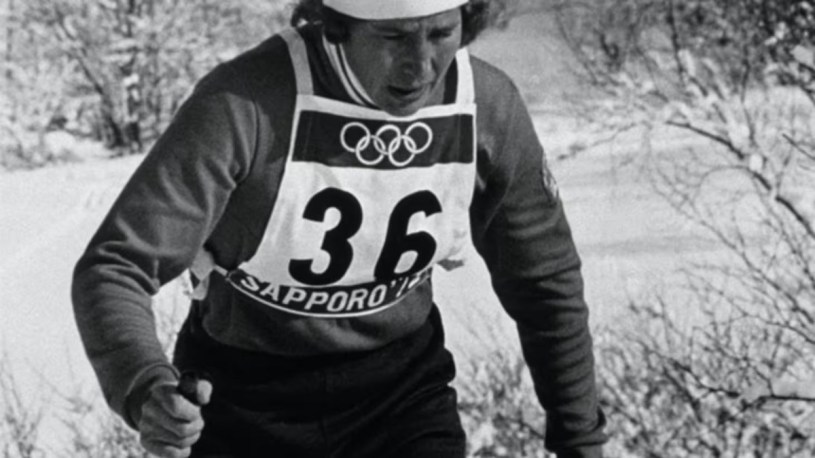
There is another summer heatwave coming down right now as Olympic Wednesday turns to the Winter Olympiad in Sapporo, Japan. Over 1,000 athletes from 35 countries made the journey to compete in these Games, which were once again marred by International Olympic Committee President Avery Brundage, a horrible human being by almost any measurement, both contemporarily and retrospectively. Enough said.
Yet on to snappier information … While the host nation won just 3 medals in a rare occurrence, the Soviet Union topped the medal table with 16, followed by East Germany with 14 medals, Norway with 12, and Switzerland with 10 medals. Those were the only 4 nations to reach double digits, as there were 35 events spread across only 10 disciplines at these Olympics. Not quite the ginormous medal hauls we see today …
Most Outstanding Male Athlete: Ard Schenk, Netherlands
After winning a silver in the 1,500m event in 1968, Dutch speedskater Ard Schenk won 3 golds in Sapporo: the 1,500m; the 5,000m; and the 10,000m races. He also competed in the 500m event, but he did not come close to winning a fourth medal there. Nonetheless, the 3 golds represented the best performance by a male participant at these Games. Only 4 athletes total won as many medals, for comparison’s sake. Well done!
Most Outstanding Female Athlete: Galina Kulakova, Soviet Union
This award goes to cross-country skier Galina Kulakova of the USSR: she brought home 2 medals from Grenoble (silver in 5km, bronze in 3x5km relay), but she outdid every other woman in Sapporo with 3 golds total (5km, 10km, 3x5km relay). Amazingly, she also would go on to win 3 more medals over the subsequent 2 olympiads in 1976 and 1980. Overall, she won 8 medals over four different Olympics. Pretty impressive!
Most Outstanding Male Team: East German Luge
The event itself is pretty insane, of course, and in crazy display of dominance, East Germany took home 5 of a possible 6 medals in the 2 discipline events: singles and doubles. After being disqualified in this event during the 1968 Games, Wolfgang Scheidel won the gold in the singles, while Harald Ehrig took silver, and Wolfram Fiedler took the bronze for a clean sweep of the event. Fielder also won bronze in doubles.
Meanwhile, Horst Hörnlein and Reinhard Bredow took the gold in the doubles. The only medal available the East Germans did not win was the silver in doubles. Sort of makes you wonder why Scheidel and Ehrig didn’t compete in the doubles, right? Maybe the East Germans could have swept that event as well. Hmmm.
Most Outstanding Female Team: East German Luge
On the women’s side of the same discipline, there was no doubles competition. Nonetheless, the East German women swept the medals in the singles: Anna-Maria Müller won gold (after also being DQ’d in 1968, oddly); Ute Rührold took silver, as she would again in 1976; and Margit Schumann won the bronze. The latter would return to win gold in 1976, by the way. Again, overall, a dominant display by the GDR.
 Daily McPlay: (mostly) Historical Sports Analysis with TENACITY & VERVE