
On NBA Tuesday, we’ve always used Player Efficiency Rating (PER) and Win Shares (WS) to help us analyze the league MVP, Rookie of the Year, and Defensive Player of the Year awards. This goes back to when we began this whole exercise at the onset of the Covid lockdown in 2020. If we didn’t have the sabermetric data available, then we used more traditional means, but of course, today, we have the data at our fingertips.
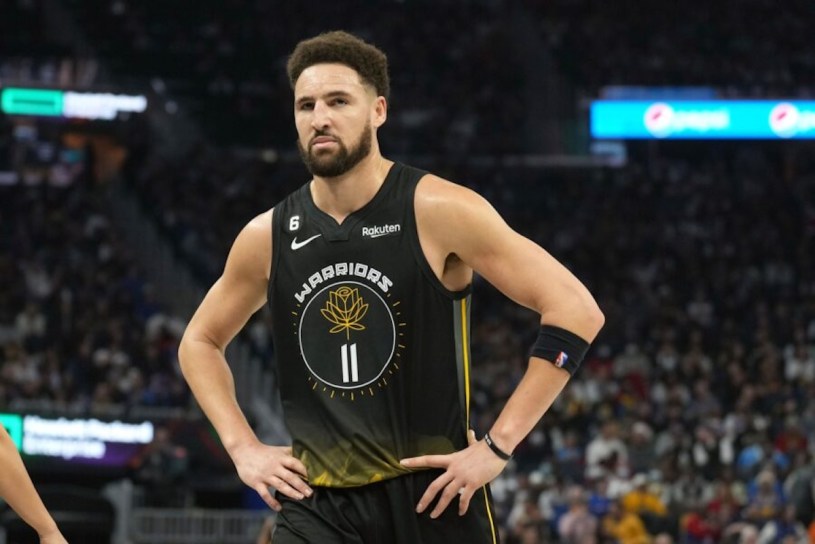
So, without further adieu, we’re going to look at the career of Golden State Warriors shooting guard Klay Thompson, who is about to become a free agent. On the surface, we’ve always thought he was something like Scottie Pippen: a second banana playing next to an all-time great who made him look a lot better than he actually was. There’s no shame in that, either, as Pippen won 6 titles and Thompson himself has won 4 rings.
To that end, here are the year-by-year PER and WS marks for Thompson, from his rookie season to 2024:
- 2012 (66 games): PER 14.9, WS 1.7
- 2013 (82): PER 12.7, WS 4.3
- 2014 (81): PER 14.3, WS 6.7
- 2015 (77): PER 20.8, WS 8.8
- 2016 (80): PER 18.6, WS 8.0
- 2017 (78): PER 17.4, WS 7.1
- 2018 (73): PER 16.0, WS 4.9
- 2019 (78): PER 16.6, WS 5.3
- 2022 (32): PER 16.7, WS 1.8
- 2023 (69): PER 14.7, WS 3.1
- 2024 (77): PER 13.9, WS 3.6
A few thoughts: 1) These are regular-season numbers only, as postseason performances are not included here. Those tend to be more volatile, anyway, due to varying sample sizes, while a full, 82-game season tells us a lot more about production and value; 2) Thompson missed 2 full seasons due to multiple leg injuries after getting hurt in the 2019 NBA playoffs; and 3) There’s an obvious peak here at age 24 in 2014-2015.
With just 1 season in the 20s for PER and no double-digit WS seasons, Thompson never has been a sabermetric superstar. Why? His most valuable asset—shooting—is the most easily replaceable asset in the sport, as we have argued and demonstrated for a long time here. Anyone can score a lot if they take a lot of shots. Over the years, looking at PER and WS marks for voted MVPs and our picks, this is easy to isolate.
Now, WS marks are impacted directly by team quality, so it’s interesting to note Thompson’s decline began in the 2015-2016 season, the one where the Warriors set a record with 73 regular-season victories. Yet he earned less WS than the season prior, and his PER—the more individual rating in sabermetric terms—also dropped noticeably. Thus, peaking at age 24 is not a good sign for any player, and shooting efficiency matters.
Next, the career numbers for Box Plus/Minus (BPM) and Value over Replacement Player (VORP):
- 2012: BPM -1.4, VORP 0.2
- 2013: BPM -0.3, VORP 1.3
- 2014: BPM 0.8, VORP 2.0
- 2015: BPM 4.4, VORP 4.0
- 2016: BPM 1.8, VORP 2.5
- 2017: BPM 0.8, VORP 1.9
- 2018: BPM -0.4, VORP 1.0
- 2019: BPM -0.3, VORP 1.2
- 2022: BPM 1.1, VORP 0.7
- 2023: BPM -0.3, VORP 1.0
- 2024: BPM -0.4, VORP 0.9
We see the same trend(s) here: a peak in 2015, a mini-resurgence in 2022 after missing 2.5 seasons with injury, and then continued decline since then. The career BPM marks is interesting, too: just 0.6 points added per 100 possessions over the average player. Thompson only has ever been a scorer, truly: his assists (2.3 per game), steals (0.9), rebounds (3.5), and blocks (0.5) are relatively insignificant. In fact, this is a doozy.
Thompson’s defensive BPM is in the red (-1.2): He’s been a liability on defense his whole career, basically, and his offensive BPM (1.7) barely has been enough to compensate for his defensive ineffectiveness. It’s interesting to note he made 5 All-Star teams in a row from 2015-2019, even though he was in decline. People just saw his scoring numbers—between 20.0 and 22.3 ppg each of those seasons—and made bad assumptions.
Just for comparison’s sake, and we know this isn’t fair to Thompson, but his partner in the “Splash Brothers” nonsense ranks significantly higher in all these sabermetric categories: Stephen Curry has put up 6.5 BPM throughout his career, and he is also positive on the defensive side (0.2), albeit barely so. Curry also had a career-high 31.8 PER in 2016, and he has posted 8 seasons with WS marks higher than Thompson’s best.
No one has ever suggested Thompson was Curry’s equal, but unfortunately, the association with Curry also has elevated Thompson’s reputation undeservedly. Heck, Curry even made Jordan Poole look good for a little while, so it’s clear that Curry is that transcendent kind of player that makes everyone around him look good—just like Michael Jordan did, or LeBron James continues to do as well. That’s not Thompson’s fault.
What the Warriors face now is a decision that is basically math versus money. Do they sign a player in serious decline to a big contract, which certainly will be his last one at age 34 this upcoming year? Do they risk the un-informed fan backlash if they let Thompson go elsewhere? Do they recognize that Thompson has been in decline for a very long time and try to convince him to take a smaller contract to stay on board?
We will answer those questions in a moment, but for now, let’s look at Thompson’s place on this roster:
- 10th in PER last season
- 9th in Effective Field-Goal Percentage
- 10th in True Shooting Percentage
- 2nd in Usage Rate
- 7th in Win Shares
- 13th in Win Shares per 48 Minutes Played
- 3rd in Offensive BPM
- 16th in Defensive BPM
- 11th in Overall BPM
- 7th in VORP
- 2nd in Salary Cap Hit ($43M+)
The oBPM mark is high because of the usage rate, but clearly, Thompson was eating up starter’s minutes while playing at the value level of a reserve player. And what happened? The team finished 10th in the Western Conference and lost a play-in game on the road in Sacramento. The key to us is the overall WS/48 mark: Thompson was 13th on his own team there in value per minute played. How big is an NBA roster?!
Exactly.
He’s not getting any younger; the extended postseasons he played in from 2015-2019 added almost another season’s worth of games to his career; the injuries have weakened his legs, inherently. And he was the 13th-most valuable player on a roster that can only suit up 15 guys per game. The Golden State front office is smart; they know all this stuff, especially if we know it. They’re better at this than we are, obviously.
So, to answer those questions above:
- Do they sign a player in serious decline to a big contract, which certainly will be his last one at age 34 this upcoming year?
- Definitely not. They would be crippling themselves long term for the sake of “loyalty”—and since they paid Thompson very well through his injuries already, when he missed 2.5 seasons recovering, they owe him nothing in an ethical or moral sense whatsoever. He’s already ahead of that curve.
- Do they risk the un-informed fan backlash if they let Thompson go elsewhere?
- They have to. Fans think with their hearts, and they’re misinformed constantly by media hype. But they’ll get over it, because they have to realize that this is a business—not a community treasure, etc. We’ve discussed this before, obviously. But hey, even Pippen left Chicago to go elsewhere after Jordan retired (the second time, 1998), and while Curry still plays at a high level, Thompson does not. Perhaps it’s time to educate the fans, politely and respectfully, about Thompson’s shortcomings. We would be surprised if the media doesn’t end up doing this for the team, in truth.
- Do they recognize that Thompson has been in decline for a very long time and try to convince him to take a smaller contract to stay on board?
- Maybe. It all depends on Thompson’s ego. He has to realize his limitations now, unless he’s super delusional. He also has to recognize that the team handed him millions of dollars while he was injured and worthless to them for 2.5 seasons. He’s been lucky to play next Curry and win 4 championships. He has all the money he will ever need. Does he want to accept a lower offer to stay comfortable and loved in the Bay Area? Or does he want to try to fool some other team into giving him a ton of money that he will never be able to earn, thus incurring the wrath of misinformed fans in another city? He’s a god in the Bay Area; he should stay for less money. Duh.
Interesting time ahead for the Golden State franchise, the most recent NBA organization to dominate a decade of play. All good things come to an end, as the Boston Celtics of the 1960s could tell you, or the Los Angeles Lakers of the 1980s could testify, or the Bulls of the 1990s exhibited. The Warriors are no different as they try to get one more run to glory out of Curry’s incredible career. But Thompson isn’t worth much now.
He was already in decline before his leg injuries in 2019-2021, and the brief “recovery” on display in 2022 and those playoffs was simply adrenaline at playing for the first time in years. He may have occasional moments of streaky-good shooting, but overall, his defense is atrocious, and there is no “designated shooter” position in basketball. His place on any roster now is, at best, coming off the bench for 15 minutes.
 Daily McPlay: (mostly) Historical Sports Analysis with TENACITY & VERVE