
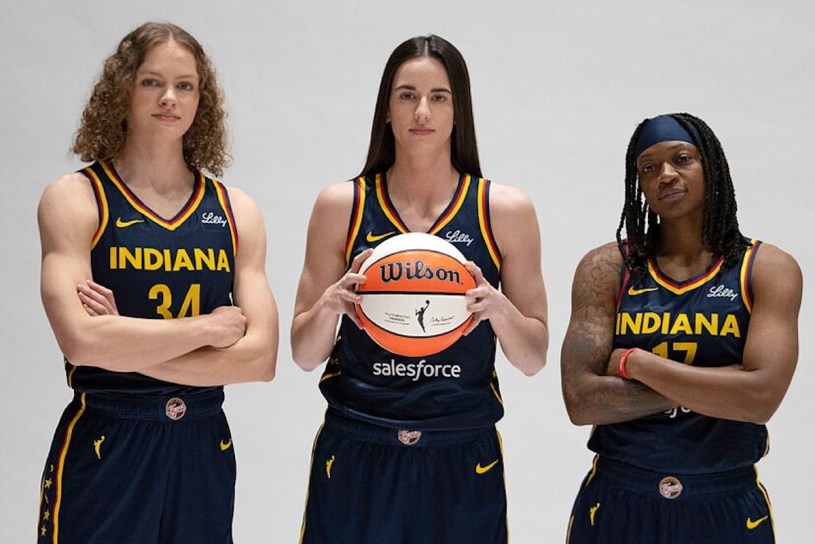
We have discussed how overrated Caitlin Clark was in college, and with 10 percent of the WNBA’s short season in the books already, we can start to assess the sabermetric data on Clark as a professional athlete. We do acknowledge that she certainly has to be tired after all the mediot attention during her final college season that just ended, and to go right into a pro season for the first time has to have been hard on her.
Needless to say, Clark’s team is 0-4 in the bat of an eyelash, and she hasn’t been very good overall. Yet her team is terrible, too, despite the presence of the last 2 top picks in the draft. When we pointed out that she was eighth on her own team in shooting efficiency at Iowa, that meant she had some decent teammates. No such luck with the Indiana Fever right now, as these sabermetric statistics demonstrate:
- Clark is 8th on her own team so far in Win Shares (WS), and her WS mark actually is negative right now (minus-0.2). That means she has hurt her team more than she has helped it in its pursuit of a victory. Of course, no lamestream media outlet is even mentioning this.
- She is 10th on her team in defensive WS (minus-0.2), and defense is a big part of any basketball player’s overall sabermetric game. What was telling in the Fever’s home loss in Game 4 was how her coach removed her from the game down the stretch on defensive stands, because she is a liability there. She “leads” her team with 4.3 fouls per game right now, which makes sense as a rookie learning.
- She is 7th on her team in offensive WS (even-0.0), which is her alleged strength. But she’s contributing virtually nothing here above what the average WNBA player could do. Considering her usage rate is tops on the team already, it means the Fever staff is giving too many opportunities to a player that doesn’t actually help them win games offensively.
- Her turnover rate is the worst on the Fever right now for players who have played more than 3 minutes total this season. Again, when your usage rate is tops and your turnover rate is the worst, you’re actually killing your team’s chances to win, no matter how many 3-point shots you make when the team already is behind on the scoreboard. Those points have garbage value, due to circumstances.
- Clark is 5th on the team in effective FG percentage (eFG) and 4th on the team in True Shooting Percentage (TSP). This an improvement from the 8th place she was in both categories her final season in college, but it still doesn’t jibe with the mediots’ narrative of her being a generational shooting talent. Not even close. In fact, she’s 8th on this team in offensive rating, which measures points produced per possession via all facets of the game (passing, shooting, turnovers, etc.).
- Her 6.5 turnovers per game is by far the worst mark on the roster, too, where no other players is losing the ball more than 2.5 times per contest. Again, usage rate is a problem here, and yes, we know she is tired; she is a rookie; she is adjusting to the pro game, etc. But still—no player should coughing up the ball 6-7 times a game at any level of organized basketball. That’s inexcusable, in truth, and really ugly. But again, is any media outlet even mentioning how bad she is on defense or in holding on to the ball?
We will re-iterate that the Fever stink; there is little talent on this team. But that makes her slow start even more alarming, really. She’s getting the ball too much; she’s fumbling it away too much; she’s a defensive liability; and she’s one of the reasons Indiana is a winless team with her WS mark in negative ranges. No way else to put it: her WNBA debut has been a disaster, which is why you don’t see her in the headlines as much.
She may be scoring 17 points per game, but her .412 raw shooting percentage is sixth on the team, and the sabermetric data we lowlighted above is even worse than that in many cases. Plus, again, scoring is the most easily replaceable skill on a basketball roster, as all it requires is a lot of shots taken. We will check back in when the team has played 10 games to see if these numbers are improving nicely or solidifying poorly.
 Daily McPlay: (mostly) Historical Sports Analysis with TENACITY & VERVE