
The tragedy of World War II put international sports on hold for 12 years, but we don’t miss a beat here on Olympic Wednesday: the 1948 Winter Olympiad returned to St. Moritz, Switzerland, the host city of the 1928 Winter Games. The locale was chosen due to the existing infrastructure and the need to host on short notice once it was confirmed the Olympics would return to their usual rotation/years. Lucky Swiss, right?
With 667 participants from 28 countries—Germany and Japan were not invited—competing in 22 events across 9 disciplines, this was a modest return to normalcy for the Games. Norway (4G, 3S, 3B), Sweden (4G, 3S, 3B), and Switzerland (3G, 4S, 3B) were atop the medal table, followed closely by the United States (3G, 4S, 2B). Austria was next (1G, 3S, 4B), as athletes tried to put the previous 12 years behind them and focus.
Most Outstanding Male Athlete: Henri Oreiller, France
The only person to win 3 medals at this Olympiad, French Alpine skier Henri Oreiller grabbed gold in the downhill and combined events, while taking a bronze in the slalom. With only 7 athletes overall winning multiple medals, it’s easier to pinpoint Oreiller for this honor. Fun story: he missed one of the medal ceremonies as he was performing on the accordion in a local bar. Oh, those crazy Frenchmen! Classic stuff.
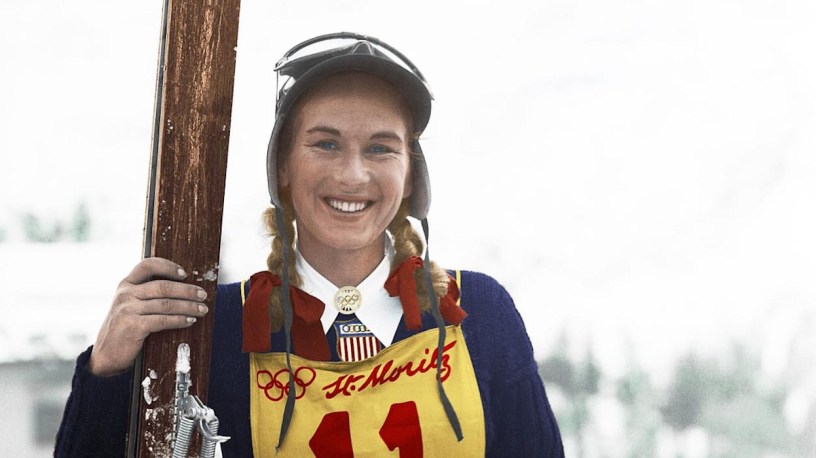
Most Outstanding Female Athlete: Gretchen Fraser, United States
Interestingly enough, among the 7 athletes to win multiple medals, there were 3 women—including Austrian Alpine skier Trude Jochum-Beiser (gold in combined, silver in downhill) and American Alpine skier Gretchen Fraser (gold in slalom, silver in combined). Normally, we’d give the nod to the winner of the combined event, all things being equal. However, Fraser competed without medaling in the downhill, too.
Why didn’t Jochum-Beiser compete in the slalom? Clearly she was good enough to do so. We respect the fact Fraser gave it a go in all 3 events, even if she finished 13th in the downhill. That’s our tiebreaker, for whatever reason. Maybe it wasn’t Jochum-Beiser’s fault to not enter all events, but the results are what we have to work with here, so Fraser gets our nod. If you disagree, we understand, and we’re not offended.
Most Outstanding Male Team: Swedish Cross-Country Skiing
In the 3 cross-country skiing events, Sweden won 6 of a possible 9 medals: 3G, 2S, 1B. The Swedes swept the medals in the 18km event, won gold and silver in the 50km event, and won gold in the 4x10km relay event. The 5 individual medals were won by 5 different skiers, too. That’s a well spread-out level of talent for one nation to put on display in a single discipline. It’s easy to award this honor, therefore.
Most Outstanding Female Team: Austrian Alpine Skiing
Led by Jochum-Beiser, Austria’s women dominated the Alpine skiing events, winning 5 of a possible 9 medals. They won silver and bronze in the downhill, bronze in the slalom, and gold and bronze in the combined. In fact, both bronze medals were won by Austrian Erika Mahringer, demonstrating the depth of talent on the national ski team. Women were starting to change the perceptions of their abilities, indeed.
 Daily McPlay: (mostly) Historical Sports Analysis with TENACITY & VERVE