
Now that the nonsense is over, with South Carolina winning the women’s NCAA Tournament, we can look at the final placement of the overrated Caitlin Clark in the sport’s history. Her last season really demonstrates how the mediots can lie to the sheeple and improve their bottom lines, whether via clickbait online or hyperbole on the television. Sadly, the vast majority of Americans don’t know facts from myth.
We discussed already why volume is not a determinant of being “great”—since any fool can improve counting statistics simply by playing a lot. The intellectual revolution began in the 1990s for sports analysts in realizing that baseball’s runs batted in were not a realistic measurement of a batter’s success at the plate. Situationally dependent counting statistics have gone by the wayside ever since, really, with sabermetrics.
So, yes, Clark scores a lot of points: for example, in the national championship game, she scored 30 points to easily lead all players in the game. But she needed 28 shots from the floor to do so, and no other player in the game took more than 14 shots overall. So if Clark took twice as many shots as the next player? Of course, she should have scored the most points. Did she score twice as many points, though, as the next?
No. And therein lies the issue: she made just 10 of her 28 shots (35.7%), which is bad by any measurement. Her 4 teammates in the Iowa starting lineup? They shot a collective 15-for-32 from the floor (46.9), which is pretty good, actually. This is why we have pointed out repeatedly that Clark is a chucker, who finished the season ranked 8th on her own team in both True Shooting Percentage and Effective Field Goal Percentage.
Bottom line: Iowa could have won if the other players had taken more shots and Clark had taken fewer shots. FACT. No GOAT falls under this kind of circumstance and reality in a championship game.
It’s like when we analyzed the mediot hype about Stephen Curry and Kobe Bryant scoring 60-plus points in a single game at age 36-plus. Curry took 10 fewer shots than Bryant did to achieve the landmark, and that’s why Curry is sixth all time in NBA history for True Shooting Percentage and 16th all time for Effective Field Goal Percentage—while Bryant is nowhere to be found in the Top 250 for either sabermetric number.
This also is why Clark is no Curry, and if people want to compare her to Kobe? Let them. He was a ball hog that people made endless fun of for never passing the ball, even if he did end up scoring a lot of points at very inefficient rates. Sheep go for big numbers, and you can’t convince them of any analytical data, because they just don’t understand. So, we will assert here that Clark is just like Bryant—and that’s not a good thing.
A few more details from the title game? She did lead her team in rebounding and assists, which shows she’s probably better than Kobe in terms of being an overall player, for sure. But she didn’t make a single steal or block, and she also committed 4 turnovers. The 5:4 ratio there for assists to turnovers is mediocre, and while her usage rate for her team is pretty high, that’s been the issue: it shouldn’t be, since she’s so inefficient.
Now, let’s look at Clark’s finishing spots in various sabermetric lists for women’s all-time college hoops:
- Career Win Shares (since 2002-2003): 12th, 41.23 WS
- All-Time Leader: Maya Moore, Connecticut, 56.56 WS
- Career Win Shares per 48 Minutes Played (since 2002-2003): 67th, .3413
- All-Time Leader: Katie Feenstra, Liberty, .5931
- Player Efficient Rating (since 2002-2003): 23rd, 38.97
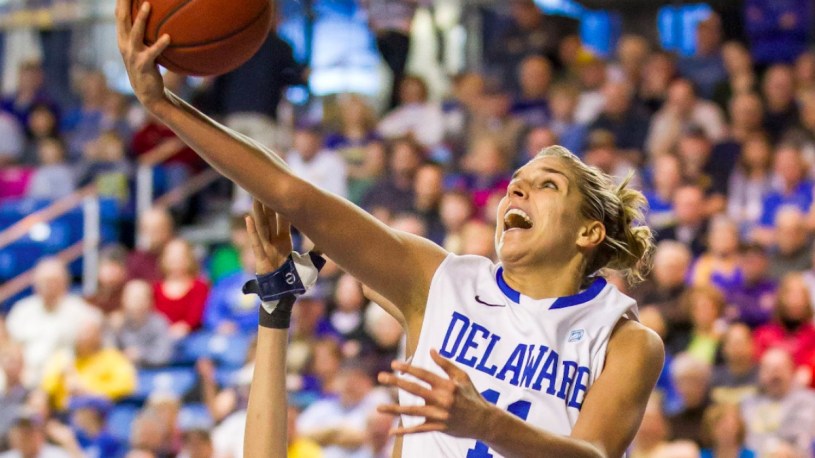
- All-Time Leader: Elena Delle Donne, Delaware, 49.86
- Effective FG Percentage (since 1987-1988): Not Ranked in Top 250, .560
- All-Time Leader: Tamika Williams, Connecticut, .7026
- True Shooting Percentage (since 1987-1988): 141st, .6078
- All-Time Leader: Tamika Williams, Connecticut, .6998
- Offensive Rating (since 2002-2003): 101st, 117.89
- All-Time Leader: Kelly Campbell, DePaul, 134.25
First, we’re going to point out the obvious: these lists are very incomplete, considering women’s college basketball has an “official” starting point of the 1971-1972 when the first national championship tournament was held. There are hundreds of amazing players not represented on these lists, therefore, which would push Clark’s rankings even lower than they already are. Context matters, even in the absence of data: fact.
Second, Win Shares and Player Efficiency Rating are the two major data points we have used in our own NBA MVP analyses here on this site since the beginning. The WS/48 mark is even more revealing for careers, however, since it levels the playing field for those with different-length careers due to factors beyond their control (team quality, injuries, scheduling, etc.). This is something we have discussed before.
The eFG and TSP categories are measurements for shooting, specifically, and while they both often favor taller players taking shorter shots closer to the basket (i.e., the highest-percentage shots), they factor in the 3-point dynamics rather well. This is why someone like Curry is ranked so high in NBA history for these 2 categories—and why players like Clark and Kobe are not ranked very well. They’re not good shooters, really.
We didn’t bother with Defensive Rating, because Clark isn’t known for her defense, and the Win Shares categories factor in defensive value already. Look at the Career WS mark set by Moore (although we suspect if the data was applied back to the early 1980s, she might not be the top dog still): it’s more than a full season more (no pun intended) than Clark’s output. Moore was a much better player than Clark is, period.
The WS/48 dilutes the usage factor a bit, too, showing the level of value at a baser level, and Clark is even worse there in history over the last two decades-plus only. This shows one more time that volume of minutes played (and therefore shots taken, points scored, etc.) merely inflates counting stats, and often playing time is beyond a player’s control, because it’s the coach making substitution decisions, etc.
PER might be the best and most accurate assessment for Clark in our eyes: she’s definitely a great player when ranked against her peers over the last 22 seasons. But when we throw in the players in prior eras, she would sink a bit in this ranking, and she is clearly nowhere near the “GOAT” status for the sport’s history. So, like Kobe, she’s just being overblown, overhyped, and overpraised for merely scoring a lot of points.
Scoring is most easily replaceable skill in the sport, since it is dependent on the number of shots taken. Yes, scoring determines the outcome of games, but every player on the court can contribute to the basket being scored: the one who grabs the rebound, the one who makes the outlet pass, the one who sets a screen to let the shooter get open, the one who passes the ball to the open player for the shot, etc. It’s not just about the shot.
Yeah, someone has to make the shot, of course, and we have data (TSP and eFG) to show Clark actually isn’t that good even at doing specifically that, despite the highlight reels showing only the made baskets. Remember, eighth on her own team in both categories, and while generally, the more shots you take lowers both TSP and eFG numbers, we have the example of Curry to show that it shouldn’t keep a real shooter down.
Bottom line is Clark has been promoted by the mediots merely to drive traffic/viewership and ad profiteering on both the internet and the television. Her sabermetric profile puts her merely as a Top 25 player, at best, over the last 20-plus seasons only. That’s a far cry from the “GOAT” status a lot of people want to bestow on her, as is the tendency of a lemming-like audience stuck in a society hell bent on idiocy.
[We close this analytic book on Clark and wish her the best in her WNBA career, which we suspect will be mediocre at best. Check back with us in 5 years to see if we were right or wrong on that prediction, please. Until then, good riddance.]
 Daily McPlay: (mostly) Historical Sports Analysis with TENACITY & VERVE
You calling somebody else “click bait” is truly the pot calling the kettle black.
LikeLike