
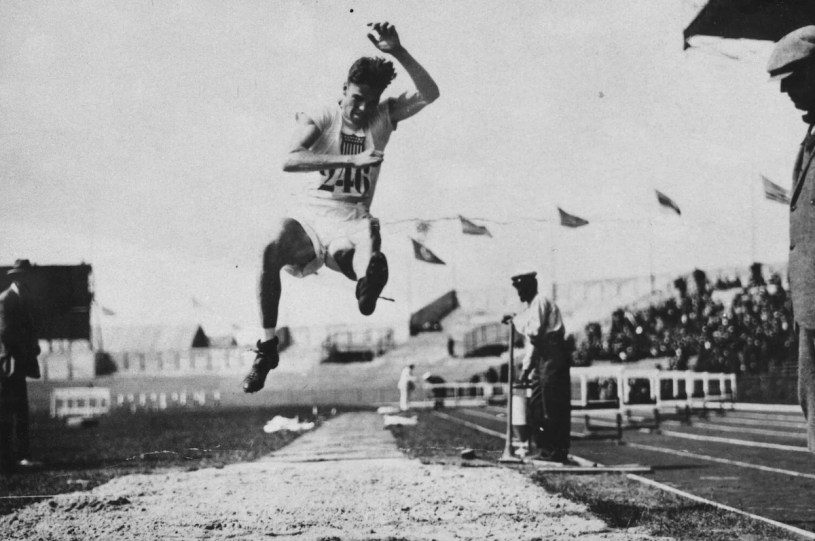
Olympic Wednesday returns to the Summer Games today with the 1924 Olympiad in Paris. Surprisingly, many United States sports fans don’t know that for a long time, it was tradition for one nation to host both the Winter and Summer events in the same calendar year. We think that says a lot about Americans’ lack of global geopolitical awareness more than anything else, but we digress. These Games are famous, after all!
There were 3,257 athletes from 45 nations participating in these Olympics, and there were 131 events spread out over 23 different disciplines. With advances in modern transportation and communication, the Games were starting to thrive, for lack of a better phrase. Many athletes from this Olympiad have achieved serious fame, and we can’t list them all here, but … our favorites are Johnny Weissmuller and Benjamin Spock.
Editor’s Note: The U.S. won the medal count (99) in a surprise, as the host nation usually does pretty well in this area. Of course, France did finish second (41), following by Finland (37) and Great Britain (35). Overall, 13 nations finished in double digits for the respective medal count, and that was a pretty awesome distribution. Twelve of those countries were European, however, so we still see an ethnocentrist hierarchy going on here in the Olympics.
Most Outstanding Male Athlete: Paavo Nurmi, Finland
After winning 4 medals (3G, 1S) in Antwerp, Finnish track & field star Paavo Nurmi won 5 gold medals in Paris: 1,500m, 5,000m, cross country, 3,000m team, and cross country team. While his teammate Ville Ritola won 6 medals (4G, 2S), we’re going with Nurmi for his all-gold results—and the range of his golds, too, fro, the 1,500 meters to the cross-country event (around 8,000 meters, evidently). That’s impressive.
Most Outstanding Female Athlete: Helen Wills, United States
Three different American women won 2 gold medals in Paris: tennis stars Hazel Wightman and Helen Wills, as well as swimmer Ethel Lackie. Wightman didn’t win an individual gold, however, with triumphs in mixed doubles and women’s doubles (with Wills). Meanwhile, Lackie won the 100m freestyle and the 4x100m relay, and Wills won the women’s singles and doubles (with Wightman). We’re going with Wills.
Most Outstanding Male Team: American Track & Field
Despite the achievements of fame by Great Britain and Finland in these Games across the discipline of track & field, the American men dominated the competition: 12 golds, 10 silvers, and 10 bronzes. With 27 events overall in the discipline, the United States took home 37 percent of the available medals. That kind of volume is hard to ignore, even if other nations did “better” among fewer events within a discipline.
Bud Houser (shot put, discus) and Harold Osborn (decathlon, high jump) led the way with 2 individual golds apiece, while U.S. teams won 2 golds, 1 silver, and 1 bronze in relay competitions, too. When watching a film like Chariots of Fire, it seems like the American “underperformed” in these Games, but it’s tough to call a 32-medal haul an underachievement. We won’t do it here, so we hope this doesn’t reek of ethnocentrism.
Most Outstanding Female Team: American Swimming & Diving
The U.S. women won 5 of the 6 medals in the 2 diving events (springboard, plain high), and they also took home 10 medals of a possible 13 in the 5 different swimming events (since a team event could have a single entry from each nation). That’s both quality and quantity, together. Overall, the swimmers took home 4 golds, 3 silvers, and 3 bronzes. As the Rolling Stones once sang, “She comes in colours everywhere …”
 Daily McPlay: (mostly) Historical Sports Analysis with TENACITY & VERVE