
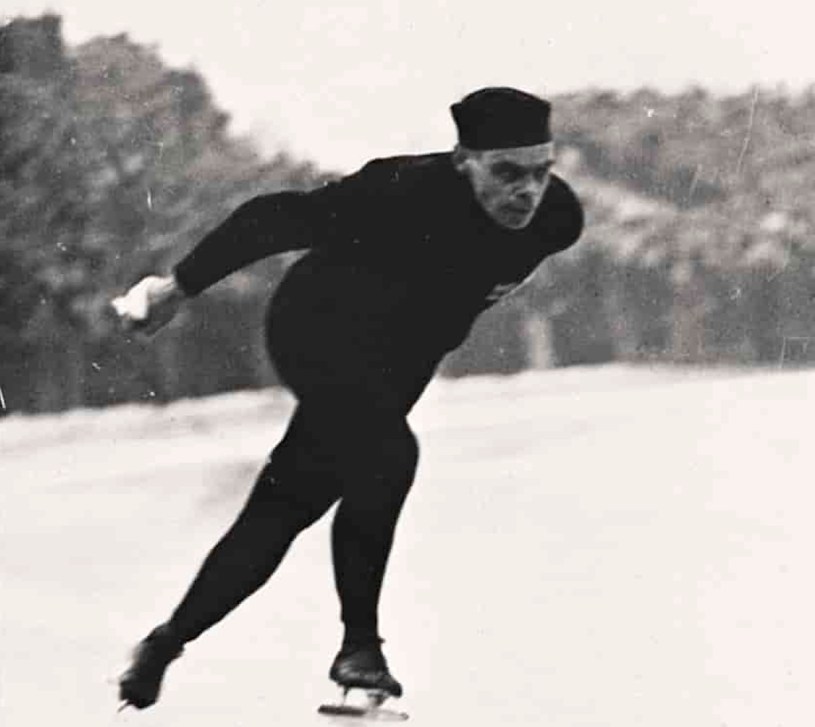
Our Olympic Wednesday miniseries get a new twist today as the first Winter Olympics were held in Chamonix, France. While figure skating and hockey had been part of the “Summer” Games prior to this, it was finally decided by the International Olympic Committee to dedicate a festival to the sports that were best in the wintertime. Retroactively, the Chamonix festival became the first winter Olympiad on record.
Editor’s Note: With just 312 athletes from 19 nations participating, this was certainly a small affair compared to the most recent Summer Games. There were only 17 events contested in 10 different disciplines, so the scope was defintely limited—which was to be expected. Either way, Norway (17 medals) and Finland (11) dominated the Games, as Great Britain and the U.S. both finished a distant third in medals won (4 each).
Most Outstanding Male Athlete: Clas Thunberg, Finland
Only 3 athletes won multiple medals, and they were all men: Finnish speed skater Clas Thunberg (5), Norwegian cross-country skier Thorleif Haug (3), and Finnish speed skater Julius Skutnabb (3). This comes down to Thunberg and Haug for us: Thunberg won 3 golds (1,500m; 3,000m; all around), 1 silver (10,000m), and 1 bronze (500m). Meanwhile, Haug’s medals were gold: 18km, 50km, and Nordic combined.
Historically, favors have gone to Haug as the “star” of these Games; he even took a bronze originally in large-hill ski jump event, but later it was discovered the scores were miscalculated. So, do we go with the best all-around speed skater or the best all-around Nordic-event competitor? We have a deep(er) appreciation for a skater who can medal in a sprint event (500m) and an endurance event (10,000m).
Most Outstanding Female Athlete: Herma Planck-Szabo, Austria
There was a single women’s event in these Games: figure skating. The gold-medal winner was Austrian Herma Planck-Szabo, as she beat out American Beatrix Loughran (silver) and Briton Ethel Muckelt (bronze). That makes this kind of an easy award to grant: Planck-Szabo won 5 consecutive world titles from 1922-1926 as well, so she was the dominant women’s skater of the era, for sure.
Most Outstanding Male Team: Norwegian Cross-Country Skiing
There were only 2 events in this discipline, but Norway men won 5 of the 6 medals awarded; the only one they didn’t claim was the bronze in the 18km event, as Finland’s Tapani Niku got that hardware to prevent the Norwegian clean sweep. In addition to Thunberg’s golds, Johan Grøttumsbraaten won silver (18km) and bronze (50km), while Thoralf Strømstad took the silver in the longer-distance event.
Most Outstanding Female Team: Austrian Figure Skating
The mixed figure skating gold went to an Austrian couple, Alfred Berger and Helene Engelmann. So, in the only events women competed, both golds went to women from Austria. That clinches this rather easily, don’t you think? Not much else to say here, except that women’s participation would increase soon.
 Daily McPlay: (mostly) Historical Sports Analysis with TENACITY & VERVE