
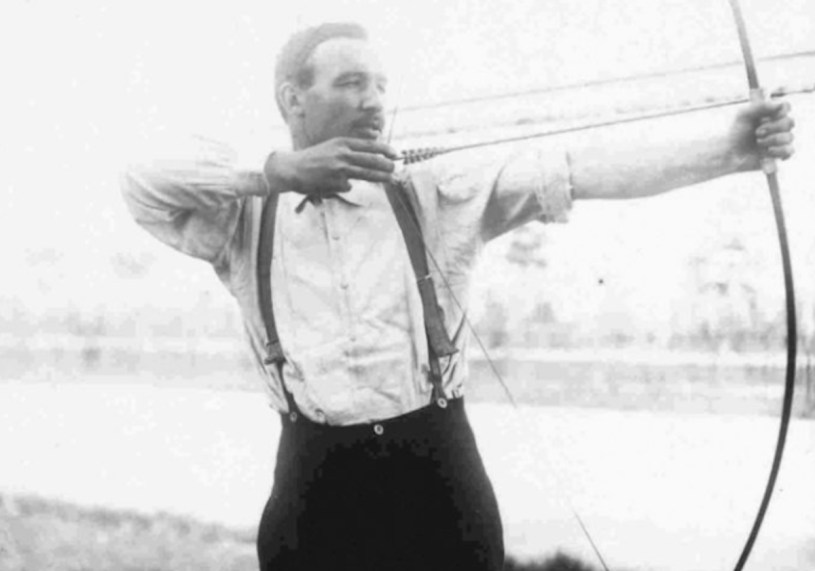
This sixth installment of Olympic Wednesday requires explanation as the planned 1916 Summer Games in Berlin were canceled at some point in 1915 due to the ongoing military conflict in Europe now known as World War I. This was our first reminder of the sociopolitical dynamic of human civilization in the twentieth century: not even sports can unite us in times of distrust, malcontent, and resentment.
Editor’s Note: With 2,680 athletes competing from 29 countries, the Olympics survived WWI. The United States (95) won the medal count, followed by Sweden (64) and Great Britain (43). Host nation Belgium (42) just missed out on the top three, as did France (42). Germany did not participate in these Olympics, and neither did Austria, demonstrating a relatively immediate sociocultural price for ending up on the losing side of the Great War.
Most Outstanding Male Athlete: Hubert Van Innis, Belgium
We have 3 topical candidates for this award, in American shooter Willis Lee (5 golds, 1 silver, 1 bronze), his teammate Lloyd Spooner (4G, 1S, 2B), and Italian fencer Nedo Nali (5G). Lee and Spooner won the most medals of these Games, but all 9 combined golds came in team events; of their combined 14 medals, overall, 13 of them were team medals. That’s often incidental, but in this situation, we need individual stuff.
Meanwhile, 2 of Nadi’s golds in fencing were individual (foil, sabre). That means more to us, of course. So maybe there are others to think about for this nod: Belgian archer Hubert Van Innis and American shooter Carl Osburn. But Osburn is just like Lee and Spooner in terms of team medals, while Van Innis won half his medals individually (28m gold, 33m gold, 50m silver). So this comes down to just two athletes now.
Van Innis won 6 medals overall (4G, 2S), which tops Nedi. He also won more individual medals, and we respect that for this “individual” award. Obviously, all these competitors were very good, and it’s like splitting hairs in the end, but we will go with the local national hero for his delivery under that kind of pressure. Perhaps if Nedi had won the majority of his medals individually, this would be a different result.
Most Outstanding Female Athlete: Ethelda Bleibtrey, United States
The top medal winner among women was American swimmer Ethelda Bleibtrey, who won 3 gold medals. She was the first woman in Olympic history to win 3 gold medals in one games, let alone 3 gold medals overall. Bleibtrey also set new world records in each of these victorious events: 100m freestyle, 300m freestyle, and the 4x100m freestyle relay. She was a trailblazer in women’s athletics, for sure.
Most Outstanding Male Team: Belgium Archery
In the 10 archery events, the host nation’s men’s team won 8 gold medals. Admittedly, there were not enough competitors to even distribute 30 medals here, oddly, but of the 21 medals awarded in men’s archery, Belgium won 14 of them—including 4 silver medals and 2 bronzes. Five of the overall 14 medals came in team events, and 6 different Belgian archers won individual medals as well. Very impressive.
Most Outstanding Female Team: United States Swimming
In addition to Bleibtrey, 3 other American women won 4 individual medals, leaving just 22 percent of the available medals to other nations. Since the team event couldn’t be swept, the U.S. swimmers actually won every individual medal possible, including two bronze medals by Frances Schroth. This makes it easy to pick this group of talented athletes for this honor.
 Daily McPlay: (mostly) Historical Sports Analysis with TENACITY & VERVE