
Summer in Sweden?! That doesn’t seem to fit for the Olympics, but this was the reality for the 1912 Summer Olympics in Stockholm. Our fifth installment of Olympic Wednesday takes us to Scandinavia, where 2,409 athletes from 29 countries participated in the Games. The only other host city considered was Berlin, Germany, so in retrospect, this turned out to be a good choice—as the Olympics finally achieved their aim.
Editor’s Note: The medal count was the most widely distributed one so far, with the host nation winning the overall count (65), followed by the United States (64) and Great Britain (41). In total, 8 different nations finished with double-digit medal totals—including nearby Finland (26) and Norway (10). That’s pretty impressive for these nations to do so well in summer.
Most Outstanding Male Athlete: Vilhelm Carlberg, Sweden
The high-medal winner of the Olympiad was Swedish marksman Vilhelm Carlberg, who won 3 gold medals and 2 silver medals. The gold medals tied 2 other athletes, but Carlberg’s extra silvers make the difference here, even if American Jim Thorpe garnered the headlines for winning the pentathlon and the decathlon. Carlberg’s medals were spread across dueling pistol, free pistol, and small-bore rifle events.
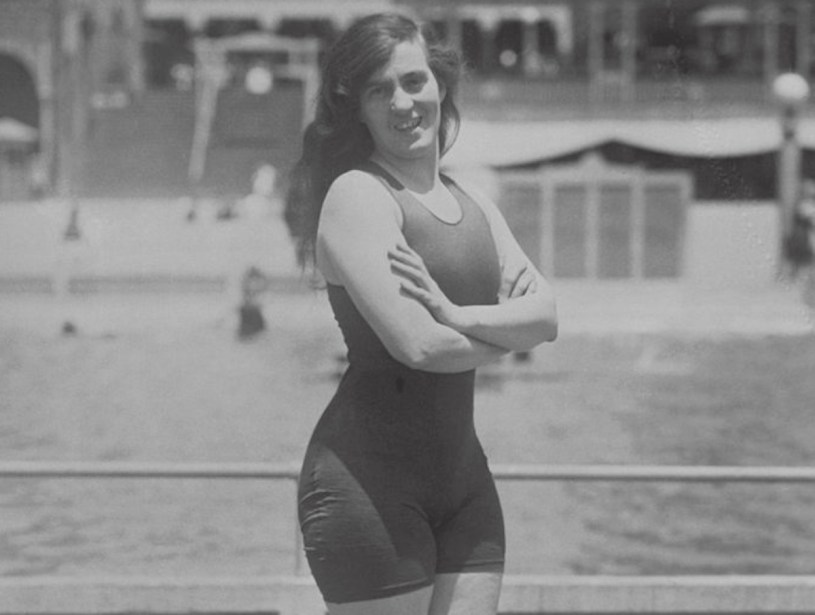
Most Outstanding Female Athlete: Fanny Durack, Australasia
There were only 5 events for women in these Games, and we’re awarding this honor symbolically to swimmer Fanny Durack of Great Britain. The 100m freestyle was the first Olympic swimming event for women, and while it was the only medal she won, it was a moment to remember in women’s athletic history. Before long, Gertrude Ederle would capture the world’s attention for her swimming, as a result.
Most Outstanding Male Team: Sweden Equestrian
There were 5 different equestrian events in Stockholm, and the host nation won 4 golds and 6 medals overall in those events: individual dressage (G, S, B); individual eventing; team eventing; and team jumping. The only event the Swedish men did not win was the individual jumping competition, won by Jacques Carlou, a French competitor. The U.S. dominated track and field events—but not at an 80-percent clip.
Most Outstanding Female Team: Australasia Swimming
In 1908 and 1912, Australia and New Zealand competed as one nation at the Olympic Games, termed Australasia. This team comprised just 2 athletes, Durack and silver-medal winner Mina Wylie—who were denied a chance to win second medals in the 4x100m freestyle relay event, since they were the only 2 swimmers representing Australasia. The women offered to each swim 2 legs, but that was against the rules.
 Daily McPlay: (mostly) Historical Sports Analysis with TENACITY & VERVE