
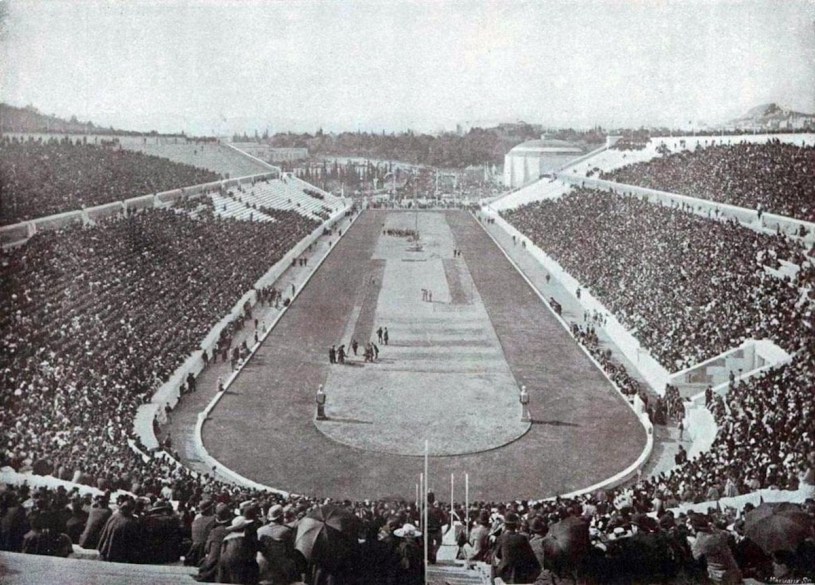
Last week, we noted how we’re done with college football, and we needed a new theme for our Wednesday columns. Well, we have one: the Olympics. Starting in 2024, we will be exploring Olympiads, year by year, from 1896 to 2022—summer and winter—to explore theoretical awards like “Most Outstanding Athlete,” “Most Outstanding Team,” and the like. We probably will do them by gender, as well, for diversity/equity.
Olympic Wednesdays will start further back than any of our other columns or miniseries, as our baseball analyses only began with the 1903 season and the advent of the World Series. The difference is less than a decade, and we start here with some historical context for the first modern Games in 1896:
The Modern Olympics were born in the late-nineteenth century as an attempt to represent the modern triumph of the civilized spirit in the face of adversity and challenge. The brainchild of Frenchman Pierre de Coubertin, the first Olympiad was held in 1896 with no women participants invited to Athens, Greece.
Periods of nationalism worldwide, interspersed with eras of internationalism, marked the twentieth century, and these geopolitical ebbs and flows also impacted the Olympic Games as well, particularly in the latter half of the century. Five times, global military conflicts led to the cancelation of Olympiads, and five different times, overt political statements were made during the Games as well.
In the process of interrogation by sports historians and journalists, it is clear to see that the Olympics themselves have transcended borders on an individual level as athletes with more in common themselves than the nations they represent have bonded through shared experiences in the Games.
We look forward to explore this rich landscape together with you in the coming weeks, months, and years (perhaps).
 Daily McPlay: (mostly) Historical Sports Analysis with TENACITY & VERVE