
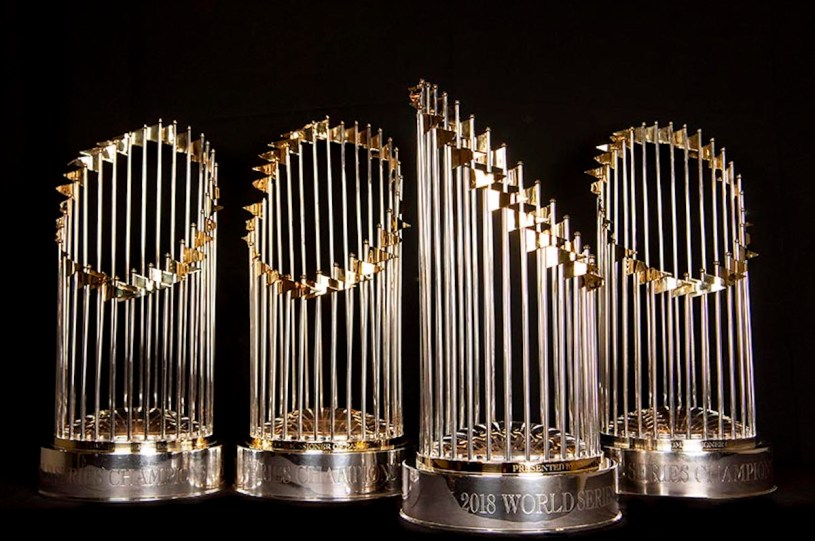
We wrote about this in 2019, and it’s time to update the data: you don’t win the World Series with a small payroll. In fact, you pretty much have to be in the Top 10 in spending to win, or at least in the top half as a few winners have been. Since the mid-1990s, though, it’s pretty clear that small payroll teams rarely win the MLB title—and this was proven again this postseason as a team with twice the payroll of the loser won out.
To wit, here are the Series title winners and their final payroll rankings:
- 1998: New York Yankees, 2nd
- 1999: New York Yankees, 1st
- 2000: New York Yankees, 1st
- 2001: Arizona Diamondbacks, 8th
- 2002: Anaheim Angels, 15th
- 2003: Florida Marlins, 25th
- 2004: Boston Red Sox, 2nd
- 2005: Chicago White Sox, 13th
- 2006: St. Louis Cardinals, 11th
- 2007: Boston Red Sox, 2nd
- 2008: Philadelphia Phillies, 12th
- 2009: New York Yankees, 1st
- 2010: San Francisco Giants, 10th
- 2011: St. Louis Cardinals, 9th
- 2012: San Francisco Giants, 7th
- 2013: Boston Red Sox, 3rd
- 2014: San Francisco Giants, 7th
- 2015: Kansas City Royals, 13th
- 2016: Chicago Cubs, 5th
- 2017: Houston Astros, 17th
- 2018: Boston Red Sox, 1st
- 2019: Washington Nationals, 10th
- 2020: Los Angeles Dodgers, 1st
- 2021: Atlanta Braves, 10th
- 2022: Houston Astros, 8th
- 2023: Texas Rangers, 4th
This is the breakdown: of the 26 champions here, 19 of them were in the Top 10 for spending—and 24 of them were in the top half for spending (rank-wise). Only 2 champions were in the bottom half of the league for payroll overhead (bolded)—and each of those teams was relatively young with some serious talent on it … and one of them we found out later was stealing signs using electronic (and illegal) mechanisms. Segue?
Throw in some cheating (italics), and you have the perfect recipe for a winner. Add a big TV market? Bingo! The potentially huge buy-in purchases from a desperate fan base that has never won anything in recent memory? Yahtzee! That’s how you win the World Series more often than not these days. Remember, some teams—the Yankees, the Cubs, the Dodgers—will make money, always, no matter what. Most teams do not.
They need to win to make serious profits, and the best way to win is still spending money (wisely)—while also cheating. Since 2004, for example, when then-MLB Commissioner Bud Selig had normalized PED use by not suspending any player unless the team’s bottom line would not suffer, at least 11 of the 20 champions have had relatively confirmed/suspected ties to cheating in one form or another. This is MLB now, sadly.
Enjoy it, sheeple—for the more you buy into the corruption, fraud, and greed, the longer it’s going to go on.


Very interesting. Love this info. I don’t understand the cheating component. “11 of the 20 most recent World Series champs are connected to cheating? I understand the ’17 Astros of course, but can you explain the other cheaters in more detail?
Thank you,
Reid
LikeLiked by 1 person
Basic animal psychology: if an individual or an organization is not punished for illegal, immoral, or unethical behavior without suffering severe consequences, that entity will not change its behavioral decisions and patterns. Colloquially, tigers cannot change their stripes. Basic organizational psychology, too.
Boston PED use/sign stealing: 2004, 2007, 2013, 2018
New York PED use: 2009
SF Giants PED use and associations: 2010, 2012, 2014
Houston sign stealing and associations: 2017, 2022
Texas Rangers PED associations: 2023
There are analyses and explorations of all these issues on the site; follow the tags.
LikeLiked by 1 person
Hey Solnichka, A very good piece, but with all due respect, these are incredible accusations you are making. For example, last year’s Texas Rangers have what PED associations? I wasn’t aware of any.
Thank you very much.
Reid
LikeLike
The circumstantial evidence piles up, and there are a lot of confirmed PED users, as well. As for the 2023 Rangers, the manager has been a PED enabler since the mid-1990s as detailed and explained in numerous posts, and suspect improvements from players under his management have been rampant for almost 30 years—despite his sub-.500 managerial record in the regular season. Therefore, it’s not hard to connect the dots with the 2023 Texas roster: it all fits the numerous cheating profiles available. All analysis on the site is supported by data and established statistical patterns.
LikeLiked by 1 person