
At the All-Star break, it looked like the 2023 San Francisco Giants were going to be maximizing the “potential” of their mediocre roster once again. The team was 49-41, and when the Giants won the first five games of the second half to push the record to 54-41, we started to shake our heads, as has been our habit here on The House that Steroids Built column over the last few years of analysis and informed scrutiny.
But the wheels came off the wagon after that high-water mark on July 18, as San Francisco posted just a 25-42 record from there on out, fired their suspect manager before the final weekend of the season, and ended up with a 79-83 record to miss the postseason for the sixth time in the last seven years. As we have explained before, though, that doesn’t mean the Giants organization wasn’t up to its usual shenanigans.
Far from it—in fact, the team relied on the same blueprint that led it to its single October since 2016: signing old, injured, and vulnerable guys to contracts in hope the situation would be a win-win scenario for all parties. When the ASG rolled around this summer, it looked like it could be working again, somewhat: we identified five highly suspicious performances that fit the pattern and profile of the last 25 years in S.F.
Alas, one of those midseason suspects predictably broke down physically at age 35 (Alex Cobb), failing to qualify for the ERA title again for the sixth year in a row. Another one reverted the career norms we’d come to expect by now for an age-30 player (Austin Slater). Even a second age-30 guy rediscovered the injury bug that had kept him down so much for the past few seasons elsewhere (J.D. Davis). Even this fits patterns.
Bodies can only be saved so much by PED use, really; eventually, they will break down from age and/or poor structural integrity. Cobb hasn’t been able to stay healthy for a full season in a long time; he can look good in spurts, with aid, but at age 35, not much is going to save a guy with an injury history. And Slater just doesn’t have enough talent, really, to begin with; meanwhile, Davis fits the Cobb mold, albeit a few years younger.
Interestingly enough, the other guy we singled out in July also ended up on the DL: age-33 reliever Scott Alexander. Especially for first-time users, PEDs can wreak havoc on a body. Remember how Barry Bonds tore his triceps muscle during his first dabbling in BALCO products? We do. But through all this mess, we still have three guys on our “final” list for the 2023 season in San Francisco, and the names won’t surprise.
Exhibit A: Lamont Wade Jr.
This guy has been on our suspect list for awhile, of course, and between his inconsistency and injuries, he fits a lot of profiles for PED use. At age 27, he came out of nowhere, literally, to put up an .808 OPS, and then Wade promptly fell back down to the ground at age 28 (.665) with injuries, etc. Lo and behold, he came back at age 29 with amazing new eyesight as evidenced by the 50-point jump in his OBP. That screams of HGH.
Exhibit B: Wilmer Flores
We used to like Flores a lot, but now we have to wonder what he’s up to at age 32, putting up the best numbers of his career (.863 OPS, 2.6 WAR). He made just $3.5M in 2022 to post a garbage .710 OPS, but for some reason? The Giants gave an aging, fading hitter a new deal worth $13M, plus an option for a third at $8.5M in 2025. Why would they do that?! Makes no sense, but Flores is now giving them their cents back.
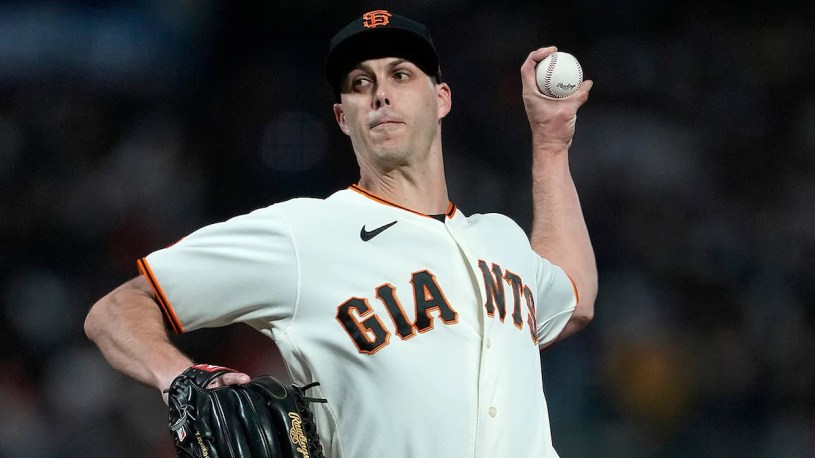
Exhibit C: Taylor Rogers
At age 32, this lefty reliever has been in the majors since 2016, but this is his first year with the Giants. Despite a 4.76 ERA at age 31, San Francisco signed him to a three-year, $33M deal before this season. Why?! They assumed his age-31 season was an anomaly, perhaps? Fair. But in lowering his ERA by almost a full run from the year before, Rogers also posted his best H/9 rate since 2018. He made just $7.3M last year, too.
Conclusion: Always an attempt at logical explanations for statistical anomalies, but …
A quarter century of patterns doesn’t lie, nor does the math as we have explained it above. Maybe Wade is a late bloomer struggling with injuries and consistency; maybe Flores had anomalous season and will revert to his prior decline in 2024; maybe Rogers was energized by pitching for the same team as his twin brother and/or motivated by his big raise. But again, after analyzing 25 seasons of Giants baseball since BALCO?
We know better. Again, we pointed this out with the Boston Red Sox analysis, too: PEDs can’t turn non-star players into stars. What they can do is give life to a sagging career, while enhancing whatever strengths a player may already possess—and perhaps give him new strengths. But players peak naturally between ages 27 and 31/32, and the decline after that is sharp if they stay natural. Players use PEDs for a variety of issues.
Sometimes, it is to get one last score in terms of a big contract; sometimes, it’s to resurrect a sagging career for one last nominal payday. Sometimes the team and the player come to an .. ahem … agreement on a late-career course correction. We’ve seen it all here in scrutinizing the Boston and San Francisco organizations for the last 25 seasons. It’s good reads if you’ve not covered it all yet—and consistent in data, for sure.
It’s also aligned with basic psychology: if an individual or an organization is not punished for illegal, immoral, or unethical behavior without suffering severe consequences, that entity will not change its behavioral decisions and patterns. Colloquially, tigers cannot change their stripes. To think the Giants suddenly stopped cheating after Bonds retired, when they profited so much from it without punishment?
Pure folly and ignorance: basic psychology.
 Daily McPlay: (mostly) Historical Sports Analysis with TENACITY & VERVE