
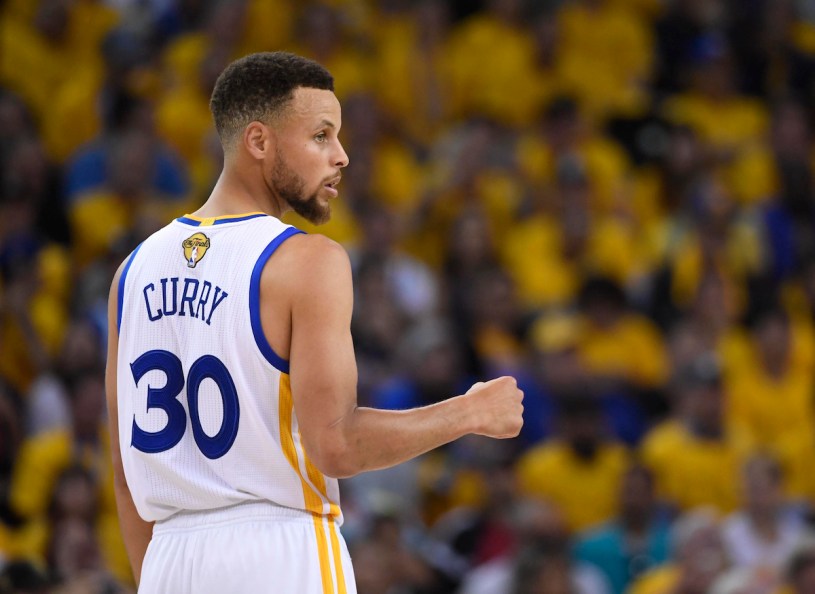
This NBA Tuesday miniseries has been exploring the best sabermetric-rated teams in each franchise’s history, and today we travel from Houston to the San Francisco Bay Area to analyze the Warriors franchise. Originating in Philadelphia back in 1946, the Warriors moved to San Francisco (1962) before settling in Oakland (1971)—and then moving back to San Francisco in 2019. That’s a fascinating little journey, eh?
The Warriors were the laughingstock of the NBA from 1992 to 2012, in truth, but the team has had a huge renaissance lately as reflected below. With 6 NBA title teams overall, it’s odd to see only two of them make this list. The others (1956, 1975, 2018, 2022) didn’t make the cut. The Warriors also won the first BAA title in 1947, by the way, and the team has made 37 playoff appearances overall, with 12 division titles. Not bad!
No. 5: 1975-76 Golden State Warriors
The defending champions posted a 59-23 record to win the Pacific Division, thanks to the No. 1 offense and the No. 4 defense. This added up to the No. 1 ranking in the overall SRS. The Warriors beat the Detroit Pistons in the first round of the playoffs, needing six games to do so, and then Golden State took on the Phoenix Suns in a seven-game series that went back and forth, with Phoenix winning Game 7 on the road.
Small forward Rick Barry (9.6 Win Shares), shooting guard Phil Smith (9.4), and SF Jamaal Wilkes (8.3) formed a strong trio atop the roster. The Warriors outscored the Pistons by 7.7 ppg in their series, but they still needed a two-point win on the road in Game 6 to advance. Against the Suns, Golden State was better by 4.2 ppg, but Phoenix won four games by a combined 20 points to pull off the shocking (at the time) upset.
No. 4: 2018-19 Golden State Warriors
With a 57-25 record, these defending champs also won the Pacific, with the No. 2 offense and the No. 16 defense. They finished No. 2 in the overall SRS rankings as well. The Warriors proceeded to beat both the Los Angeles Clippers and the Houston Rockets in six games to advance to the Western Conference Finals, where they swept the Portland Trail Blazers. But injuries derailed Golden State in the Finals versus Toronto.
SF Kevin Durant (11.5 WS) and point guard Stephen Curry (9.7) topped this balanced team with relatively modest WS value. The Warriors had little trouble with the Clippers (plus-9.8 ppg), but the Rockets were much tougher (only plus-1.8 ppg)—all six games were decided by six points or less. Eventually, both Durant and shooting guard Klay Thompson suffered disastrous injuries, and the Raptors won the Finals in six.
No. 3: 2014-15 Golden State Warriors
After winning just 51 games the year before, these Warriors leaped to a 67-15 record to win the Pacific. Golden State was No. 1 on offense, No. 15 on defense, and No. 1 in the overall SRS rankings. The team glided through the Western Conference playoffs, dropping just 3 games total against the New Orleans Pelicans, the Memphis Grizzlies, and the Rockets. It then took the Warriors six games to beat Cleveland in the Finals.
Curry (15.7 WS), Thompson (8.8), and power forward Draymond Green (8.5) formed a nice Big Three as the initial core of this current GSW dynasty. Curry won the MVP vote, although we disagreed. This was Thompson’s peak season, in truth, by far, and in the Finals against LeBron James, these Warriors truly showed their prowess: winning by 7.2 ppg overall, they won Games 4, 5, and 6 by a combined 42 points.
No. 2: 2015-16 Golden State Warriors
With a 73-9 record, this group set the all-time wins record for an NBA regular season—and obviously won the Pacific Division again, too. The Warriors were No. 1 on offense, No. 19 on defense, and No. 1 in the overall SRS rankings. After dropping Houston and Portland easily in the playoffs, though, Golden State needed seven games to beat Oklahoma City, and then in the Finals, the Cavaliers won Game 7 on the road. Ouch.
Curry (17.9 WS), Green (11.1), and Thompson (8.0) again carried the load, and we confirmed Curry’s MVP vote win this time. But it was the seven games against the Thunder which drained the Warriors’ postseason energy. Golden State fell behind 3-1 in the OKC series, before winning the last three games by 8 ppg. In the Finals, it was Cleveland coming back from the 3-1 deficit, though, winning the final three contests by 11 ppg.
No. 1: 2016-17 Golden State Warriors
Learning some load management, this was the best team in organizational history: a 67-15 record, No. 1 on offense, No. 11 on defense, and No. 1 in the SRS rankings overall. The Warriors went 16-1 in the playoffs, sweeping all three Western Conference opponents—Portland, Utah, and San Antonio—before exacting revenge on Cleveland with an easy five-game series win in the Finals … for a plus-14.0 ppg playoff margin.
Curry (12.6 WS) and Durant (12.0) were the top dogs on this incredible team, which featured 10 players with at least 2.3 WS on the year. That depth kept the team fresh heading into the playoffs, where the coaching staff could turn up the intensity all the way on every opponent, every game. After rolling to a 3-0 lead in the Finals, it did seem like Golden State took a breather in the Game 4 loss, but it didn’t matter at all in the end.
 Daily McPlay: (mostly) Historical Sports Analysis with TENACITY & VERVE