
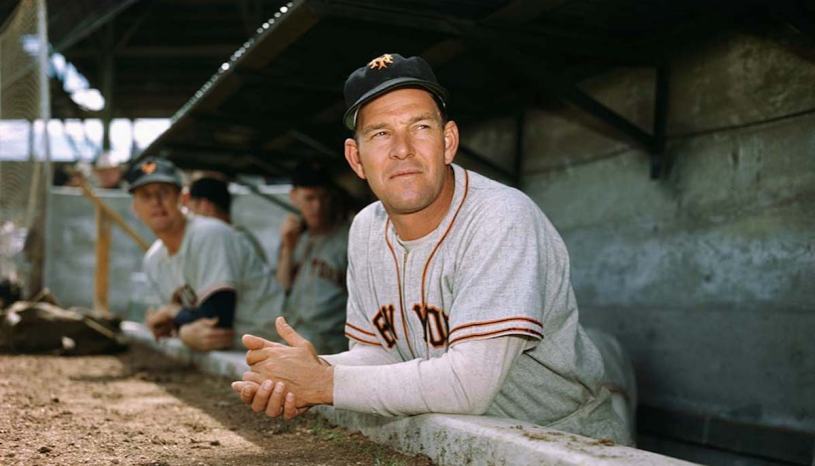
We’re continuing the MLB GOAT debate, and that means we will put out an era-best lineup for the Babe Ruth Era today, which is basically the 1920s and the 1930s inclusive. Babe Ruth himself revolutionized the sport, ushering in a new era of game play—featuring a lot more home runs, a lot more scoring, and a lot more offense—after the prior era was about something else together. Here’s our GOAT analysis then …
Catcher: We have just three candidates here, but they are all great ones. Bill Dickey (7th-highest WAR total at the position, 56.3 WAR) , Gabby Hartnett (8th, 55.4), and Mickey Cochrane (11th, 49.7) dominated the position in this era. Dickey was on an astonishing eight World Series winners, while Cochrane steered three title teams himself. Hartnett never managed to win it all, even though he was the best defensive player of the trio. Dickey benefitted from playing for the New York Yankees, while Cochrane won two AL MVP votes with two different teams (1928 with Philadelphia, 1934 with Detroit). Dickey played four more seasons than Cochrane, had better teammates, and was an inferior hitter. We will go with Cochrane here, but we doubt any catcher will get advanced to our final analysis, although time will tell on this one.
First Base: This space comes down to only two guys, really, both multiple-time AL MVPs, too. Lou Gehrig (1st, 113.8) and Jimmie Foxx (4th, 92.2) were monsters in the era, winning five MVP votes between them. And Foxx had three of those, for two different teams not named the Yankees (1932 and 1933 with Philly, 1938 with Boston). Gehrig won his in 1927 and 1936. We know Gehrig’s record for consecutive games played, and he won the World Series seven times. Foxx won it twice himself. In the end, we have to give Gehrig the nod here while sliding Foxx to the Utility category below, because he’s that good, historically speaking.
Second Base: Again, like the Dead Ball era, this is a stacked analysis. It goes to show you the importance of the keystone in the early days of modern baseball. We have three great candidates here, and the list starts with Rogers Hornsby (1st, 127.1), and maybe we shouldn’t add these other guys: Charlie Gehringer (5th, 84.8), and Frankie Frisch (8th, 71.8). Hornsby is so dominant here, it’s not a discussion, really. He won NL MVPs in 1925 with St. Louis and 1929 with Chicago, while also winning the 1926 Fall Classic over Ruth & Co.
Third Base: There’s only one player worth mentioning here, and he won’t get advanced to our final analysis. Stan Hack (21st, 55.5) played 16 years for the Chicago Cubs, and he was a five-time All Star. But those are the highlights. Somehow, despite being the best third baseman of the era, Hack still led the NL in times caught stealing five years in a row (1936-1940). You’d think someone would have told him to just stop.
Shortstop: At this position, Joe Cronin (16h, 64.8) and Joe Sewell (20th, 54.7) are as good as it gets here. Neither will get advanced, but we have to pick one for the era’s top dog. The former was a seven-time All Star with the Washington Senators and the Red Sox, although he never won the Series or the MVP. The latter won two World Series: one with Cleveland (1920) and one with the Yankees (1932). We pick Cronin.
Left Field: Only two players stand out in left, and those guys are Al Simmons (9th, 68.3) and Goose Goslin (11th, 66.2). Both won the Fall Classic twice, neither guy with the Yankees, either! Both were negative glove men, too, which means they won’t be getting advanced (not that they would, anyway). But Simmons was a little better with the glove, and he also won two batting titles with the Philadelphia Athletics. He’s our guy.
Centerfield: There is not much to choose from here, surprisingly, so we go with Earl Averill (24th, 51.6). This was just not a position that held a lot of value at the time, evidently. But he was a lifetime .318 hitter who made six All-Star teams. That’s not bad, although it’s not going to get him advanced, either.
Right Field: Well, this era’s namesake player is pretty good (1st, 162.2), so he wins this position and advancement from us, hands down. But we’d also like to highlight Mel Ott (4th, 110.9) and put him in the UTL category below. Ott was also our pick for the NL MVP in both 1934 and 1936. We have to consider him.
Pitchers: Two starters stand out here, without a doubt. Grover Alexander (4th, 119.3) and Lefty Grove (7th, 106.8) dominated the major leagues in this era of hitting prowess. Alexander won six NL Cy Youngs from us, while Grove nabbed a whopping nine AL Cy Youngs in this space. Yeah, they both get advanced, pretty readily.
Utility Players: Foxx and Ott are both all-time greats who deserve consideration despite not being “the best” at their positions in their own eras. Yet Foxx started in the majors as a catcher behind Cochrane in Philadelphia before being moved to first base and also playing third base. He fits the UTL slot perfectly. Plus, as a teenager coming up with the N.Y. Giants, Ott played all three OF positions in addition to some time at second and third bases. Makes perfect sense to include him here, as they both get advanced.
To recap, then, our Babe Ruth Era GOAT lineup is as follows: C Cochrane, 1B Gehrig, 2B Hornsby, SS Cronin, 3B Hack, LF Simmons, CF Averill, RF Ruth, SP Alexander, SP Grove, UTL Foxx, and UTL Ott. Advancing to the finals discussion later are the seven players noted above, bringing our current finalist count to 14 players so far. Yikes, this is going to be a hard exercise to complete by the end of the summer!
 Daily McPlay: (mostly) Historical Sports Analysis with TENACITY & VERVE